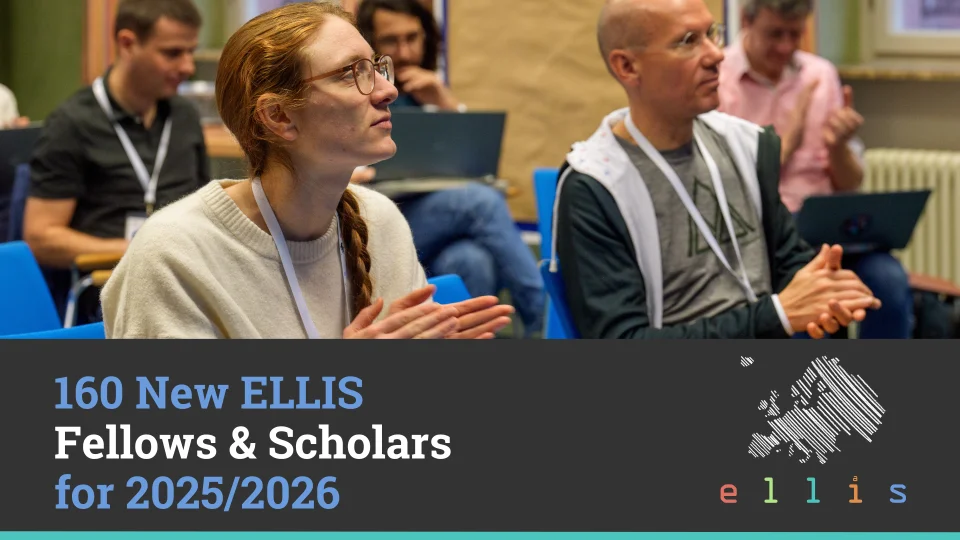
ELLIS Selects 160 Outstanding Researchers in Machine Learning as New Fellows and Scholars for 2025–2026
ELLIS Fellows are leading scientists with more than 10 years of research experience in machine learning and AI, while ELLIS Scholars are outstanding early-career researchers with the potential to progress towards Fellow-level seniority. Both must be affiliated with an ELLIS Unit or Program, where they contribute to the network’s scientific activities and development. They also help advance ELLIS’s mission through research collaboration, the supervision of PhD students, and the development of research initiatives across Europe.
The selected researchers include 91 ELLIS Fellows and 69 ELLIS Scholars. Among the newly accepted Fellows are 17 researchers transitioning from Scholar to Fellow, recognising their progression within the ELLIS network. In total, the ELLIS network now counts 701 Fellows and Scholars from 25 countries.
Nicolò Cesa-Bianchi, ELLIS Unit Milan Director and Area Chair of the Fellows Selection Committee says,
Maintaining the scientific excellence of the ELLIS network requires a rigorous and thoughtful selection process. By assessing candidates against high standards of scientific excellence, societal impact, and commitment to ELLIS, we ensure that our Fellows and Scholars not only represent outstanding research talent but also share the values and vision that underpin our network. This process is essential to sustaining the quality of our research community, fostering meaningful collaboration, and strengthening Europe’s position in machine learning and AI.
Acceptance Rate and Geographic Distribution
The 2025–2026 selection process attracted 283 nominations from ELLIS Units and Programs. After accounting for withdrawals and duplicate nominations, 265 unique nominations remained. Following the eligibility screening, 228 nominations proceeded to the selection process, from which 160 researchers were accepted.
Newly established ELLIS Units were also part of the 2025–2026 selection process, bringing additional research communities into the network. These include Cote d’Azur, Hamburg, Innsbruck, Ireland, and Norway. Learn more about the new Units, their research focus, and the teams behind them in our dedicated article on the new ELLIS Units.
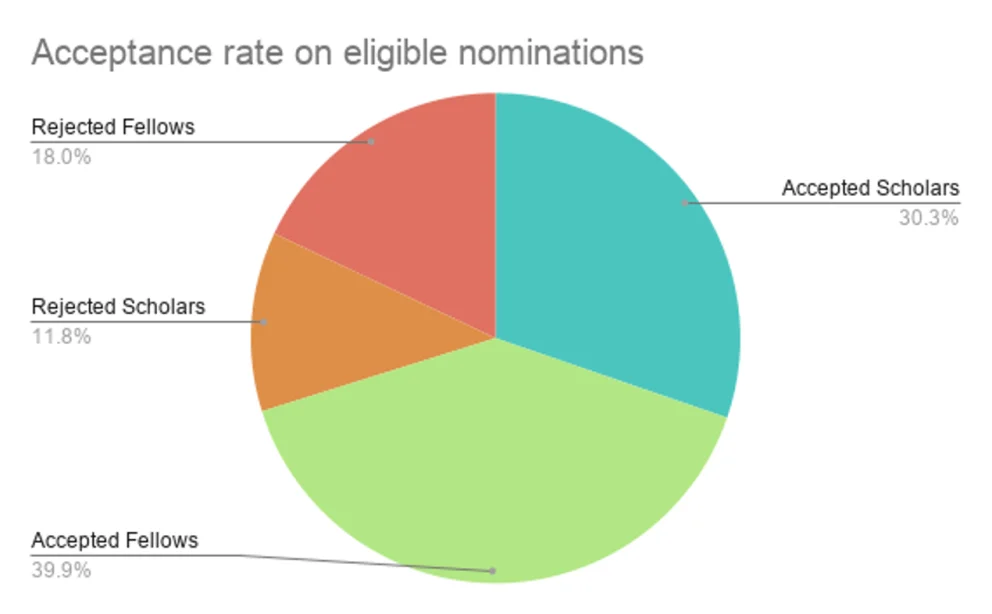
Of all eligible nominations, 70.2% resulted in acceptance. The acceptance rate was 63.5% for eligible Fellow nominations and 69% for eligible Scholar nominations.
The selected researchers work across a broad range of European countries. Germany, Italy, France, the United Kingdom, and the Netherlands were the five most represented countries of work among the accepted Fellows and Scholars, followed by Switzerland, Belgium, Spain, Austria, and Denmark.
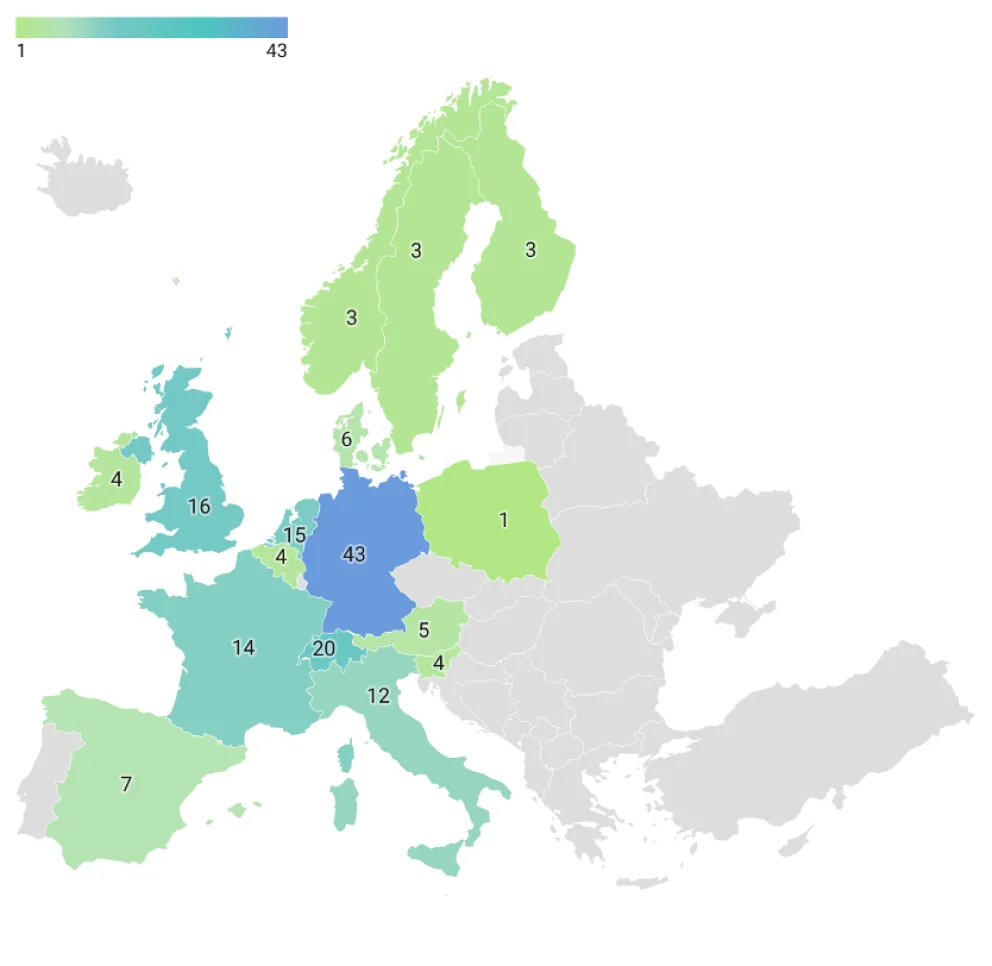
The highest acceptance rates by country of work were recorded in Switzerland (90.9%), the United Kingdom (89.5%), and the Netherlands (88.2%). These figures reflect the outcomes of this selection round and should be interpreted in the context of the number and profile of eligible nominations from each country.
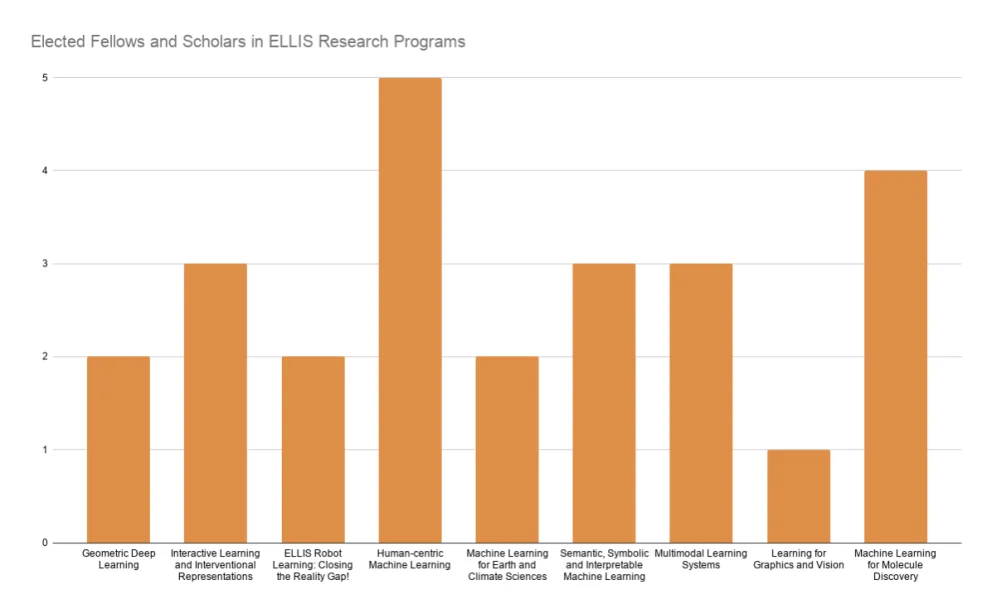
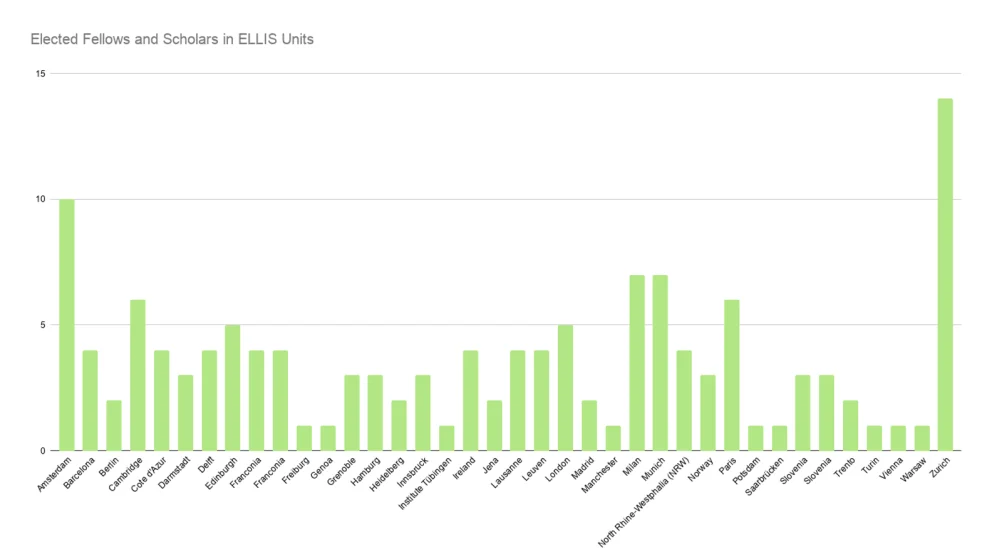
The charts below show the distribution of newly elected Fellows and Scholars across ELLIS Units and Programs, displaying the number of researchers joining each Unit and Program.
Research Fields Span Core Machine Learning and Emerging Challenges
Candidates were invited to identify their primary, secondary, and third research areas, allowing the selection process to capture the breadth of their expertise. Among accepted Fellows and Scholars, the most common primary research areas were Natural Language Processing, Computer Vision, Deep Learning, Bayesian and Probabilistic Learning, and Machine Learning Algorithms.
Acceptance rates varied across these areas. Natural Language Processing had an acceptance rate of 90.9%, followed by Deep Learning at 88.8%, Bayesian and Probabilistic Learning at 78.6%, Computer Vision at 61.3%, and Machine Learning Algorithms at 60%.
Computer Vision was the most frequently selected primary research area across submitted and eligible nominations. However, its comparatively lower acceptance rate illustrates that application volume alone does not determine selection outcomes. Natural Language Processing and Deep Learning, by contrast, combined substantial representation among accepted candidates with high acceptance rates.
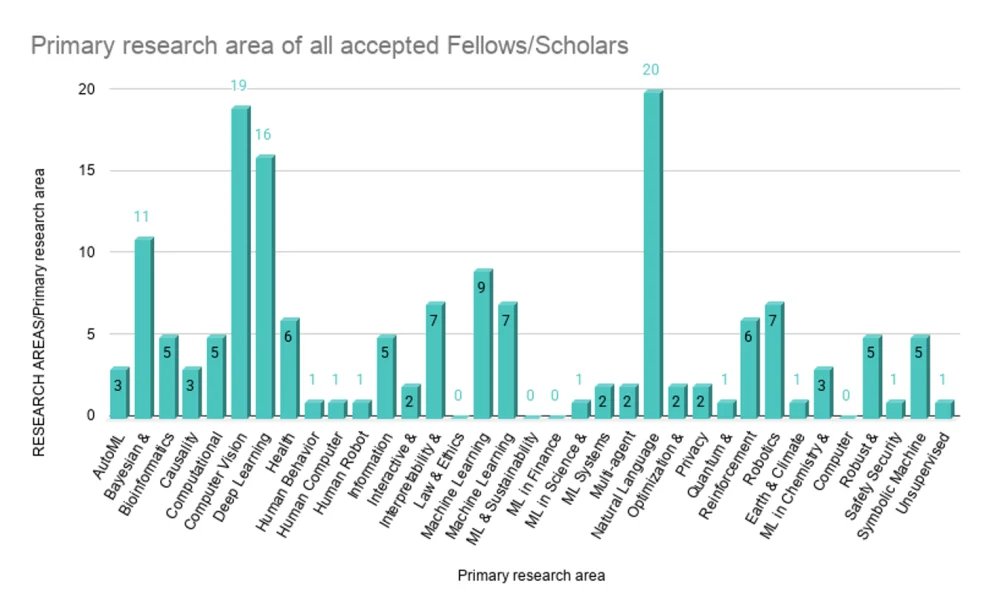
Across all three nominated research areas, the most represented topics among accepted Fellows and Scholars were Deep Learning, Machine Learning Algorithms, Computer Vision, Robust and Trustworthy Machine Learning, and Natural Language Processing.
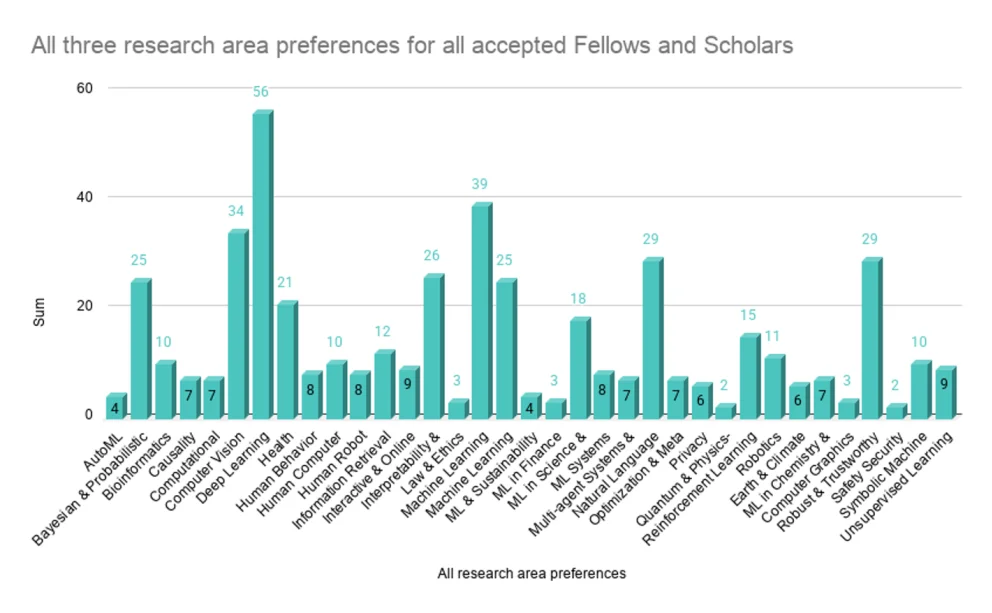
These results highlight the breadth of expertise, spanning foundational machine learning methods, advances in perception and language, and research addressing the robustness and trustworthiness of AI systems.
Gender Representation Among Accepted Fellows and Scholars
Gender representation across the 2025–2026 ELLIS Fellows and Scholars selection reflects patterns already present at the nomination stage. Among eligible nominations, 68.8% identified as male, 30.6% as female, and 0.6% as another gender.
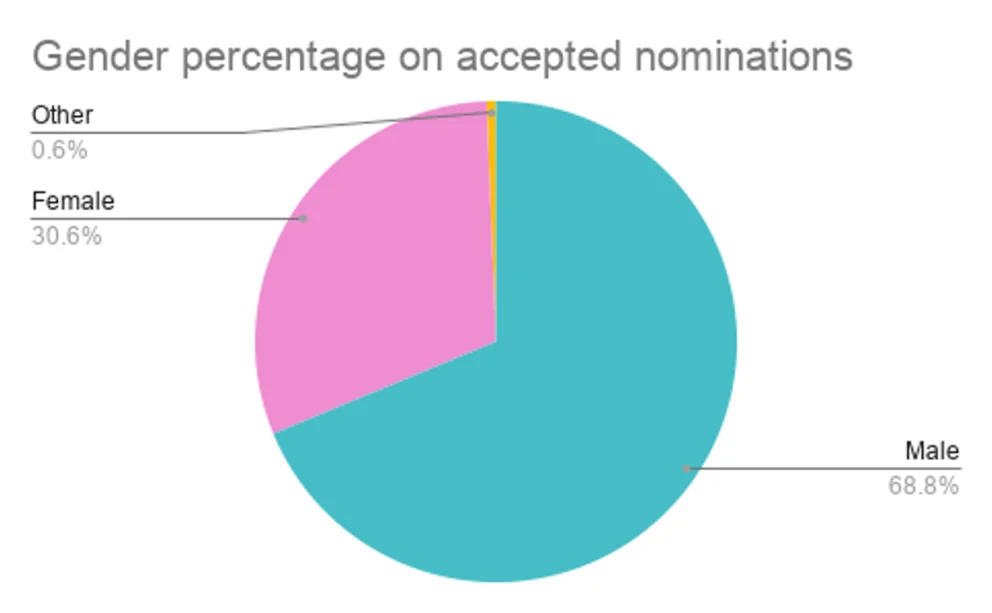
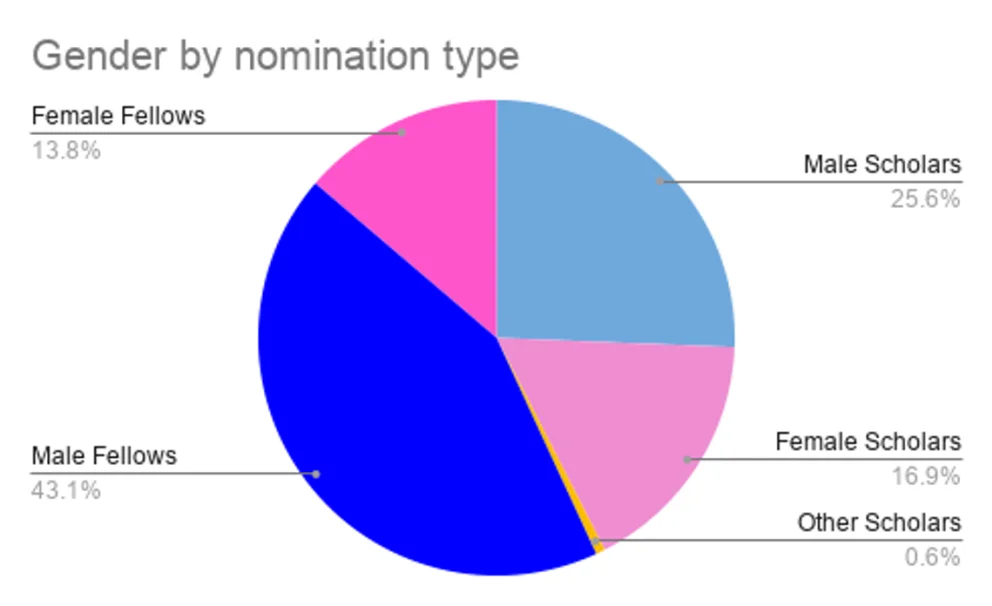
Researchers identifying as female accounted for 30.6% of all accepted candidates, representing 24.2% of Fellows and 39.1% of Scholars. This indicates a more balanced gender distribution at Scholar level, while a representation gap remains at the more senior Fellow level.
Acceptance rates on eligible nominations were comparable for candidates identifying as male (69.6%) and female (71%), with no indication of a lower acceptance rate for female candidates in this selection round. These figures suggest that representation differences are primarily evident at the nomination stage rather than in acceptance rates, highlighting an opportunity to encourage broader representation in future nominations.
Collaborative Selection Process
The 2025–2026 ELLIS Fellows and Scholars selection process began with an open call launched on 26 June 2025. Nominations were submitted by ELLIS Unit and Program Directors and Coordinators. Candidates were assessed across three dimensions: scientific excellence, societal impact, and relationship to ELLIS. Positive assessments in all three dimensions were required for acceptance.
Each candidate was evaluated by existing ELLIS Fellows and Scholars, assigned where possible according to their research expertise. The assignment process also took into account candidates’ and reviewers’ countries of work and nationalities.
The selection process was coordinated by the ELLIS Fellows Selection Committee, comprising one General Chair and 15 Area Chairs organised into five research-area groups. Each nomination was assessed by reviewers, after which an Area Chair consolidated the reviews and proposed a decision. The other two Area Chairs in the same group then examined the nomination and recommendation, providing an additional layer of scrutiny and enabling discussion of borderline cases during decision meetings. The full committee subsequently finalised the decisions.
The committee was chaired by Andrew Blake (FREng FRS, Consultant in Artificial Intelligence; Emeritus VP, Clare Hall, University of Cambridge; Emeritus Distinguished Scientist, Microsoft).
The five research-area groups were:
Theory and Algorithms: Nicolò Cesa-Bianchi (University of Milan), Deputy Chair; Christoph Lampert (Institute of Science and Technology Austria) and Lorenzo Rosasco (University of Genoa), Area Chairs.
Bayesian and Probabilistic Learning and Robotics: Chris Williams (University of Edinburgh), Deputy Chair; Justus Piater (University of Innsbruck) and Tamim Asfour (Karlsruhe Institute of Technology), Area Chairs.
Computer Vision and Multimodal Learning: Tinne Tuytelaars (KU Leuven), Deputy Chair; Barbara Caputo (Polytechnic University of Turin) and Tomas Pajdla (Czech Technical University), Area Chairs.
Natural Language Processing: Barbara Plank (Ludwig Maximilian University of Munich), Deputy Chair; Ivan Titov (University of Amsterdam and University of Edinburgh) and Roi Reichart (Technion), Area Chairs.
AI for Health, Bioinformatics, and Trustworthy AI: Ole Winther (University of Copenhagen), Deputy Chair; Christian Igel (University of Copenhagen) and Sergio Escalera (University of Barcelona), Area Chairs.
The process combines assessments from researchers with relevant expertise with collective committee review, supporting careful evaluation across a diverse range of research fields. The evaluation guidelines for ELLIS Fellows and Scholars are available here.
Meet the Newly Elected ELLIS Fellows and Scholars for 2025–2026

























































































Ana Klimovic
Andrea Volkamer
Andrew Saxe
Blaž Škrlj
Brooks Paige
Eleni Chatzi
Elliott Ash
Ender Konukoglu
Eric Gaussier
Florence Forbes
Fosca Giannotti
Hannah Bast
Imanol Schlag
Maarten De Vos
Michael Moor
Mirco Musolesi
Miri Zilka
Miryam De Lhoneux
Moritz Gerstung
Nicolas Brunel
Ricardo Baeza-Yates
Rocio Mercado
Sofia Vallecorsa
Tim Rudner
Yves Moreau
How to become an ELLIS Fellow or Scholar
ELLIS regularly invites nominations for new Fellows and Scholars through calls announced on its website, social media channels, and newsletter. Nominations can only be submitted by directors of ELLIS Units and Programs. Each candidate undergoes a rigorous evaluation by the ELLIS Fellows Selection Committee, based on scientific excellence, societal impact, and their relationship to ELLIS. For more information, see the evaluation criteria.
Scientists can also join the ELLIS network as a member. Find out more about ELLIS membership.
Statistics compiled by Giulia Clerici, ELLIS Fellows & Scholars Coordinator