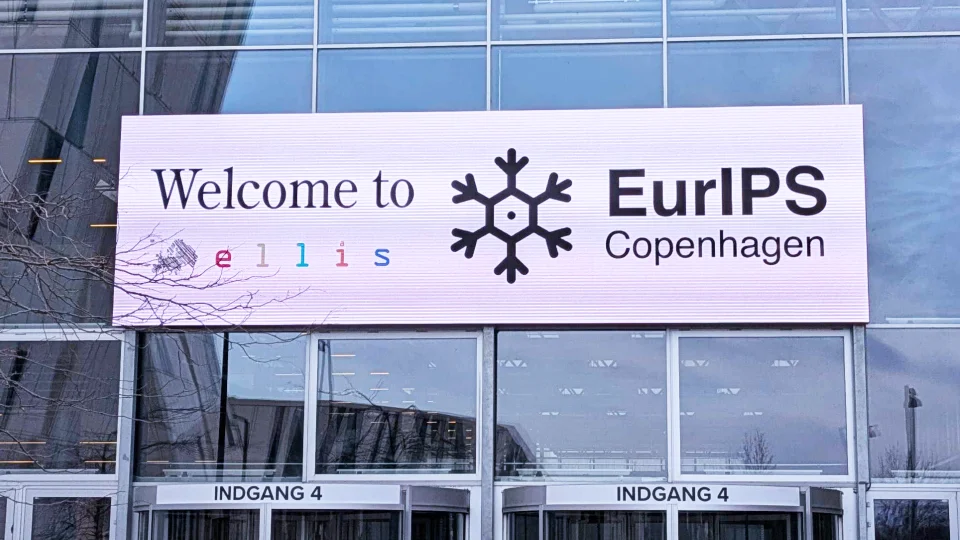
EurIPS & the ELLIS UnConference 2025 - A Milestone for Europe’s AI Community
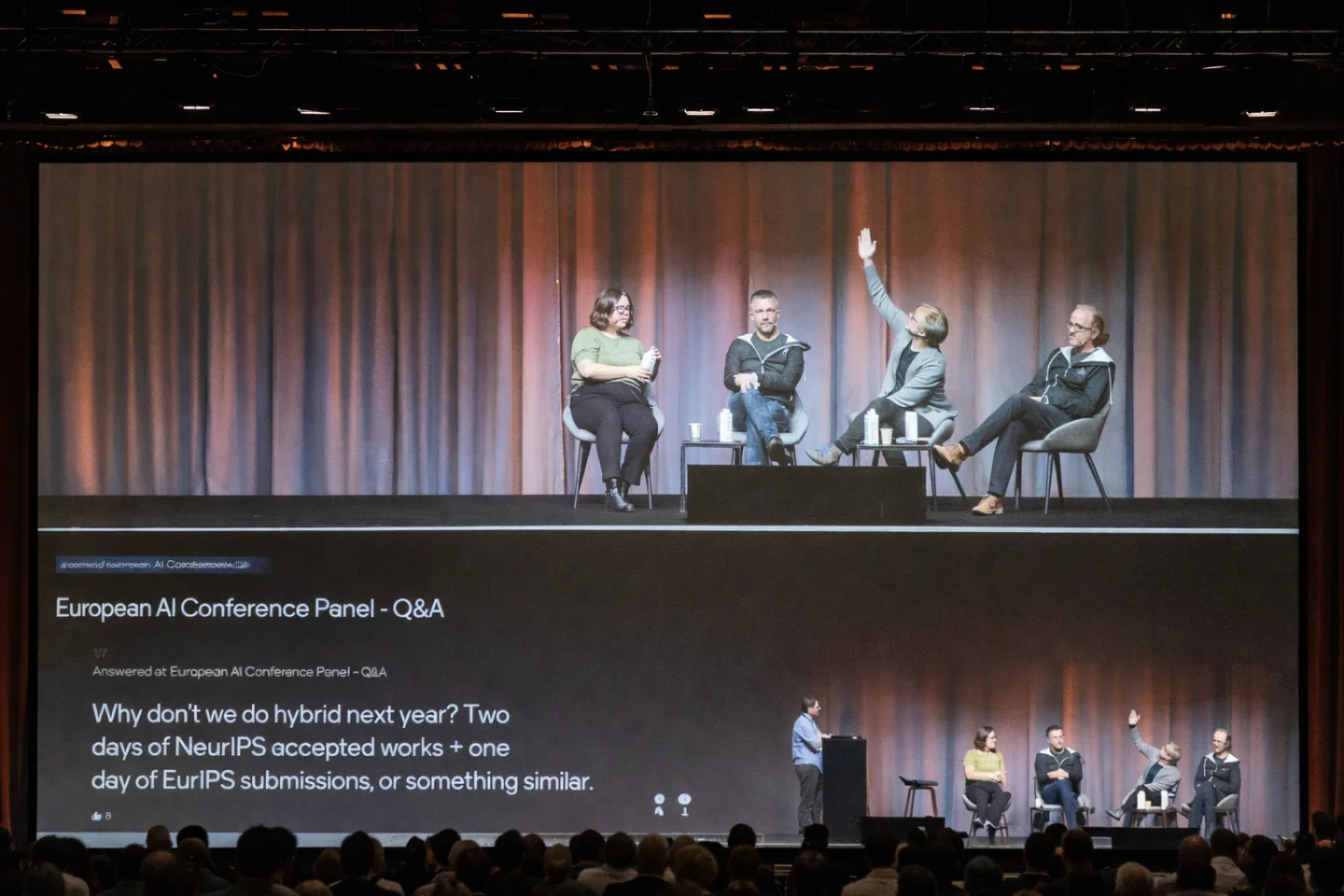
For many years, the global AI research agenda has been strongly influenced by research based in the United States - an influence that has propelled innovation, while also posing participation challenges for parts of the global community, including Europe. EurIPS was created to respond to this gap, providing a European venue for presenting and discussing work accepted at NeurIPS, one of the world’s leading conferences in machine learning and artificial intelligence, traditionally held in North America.
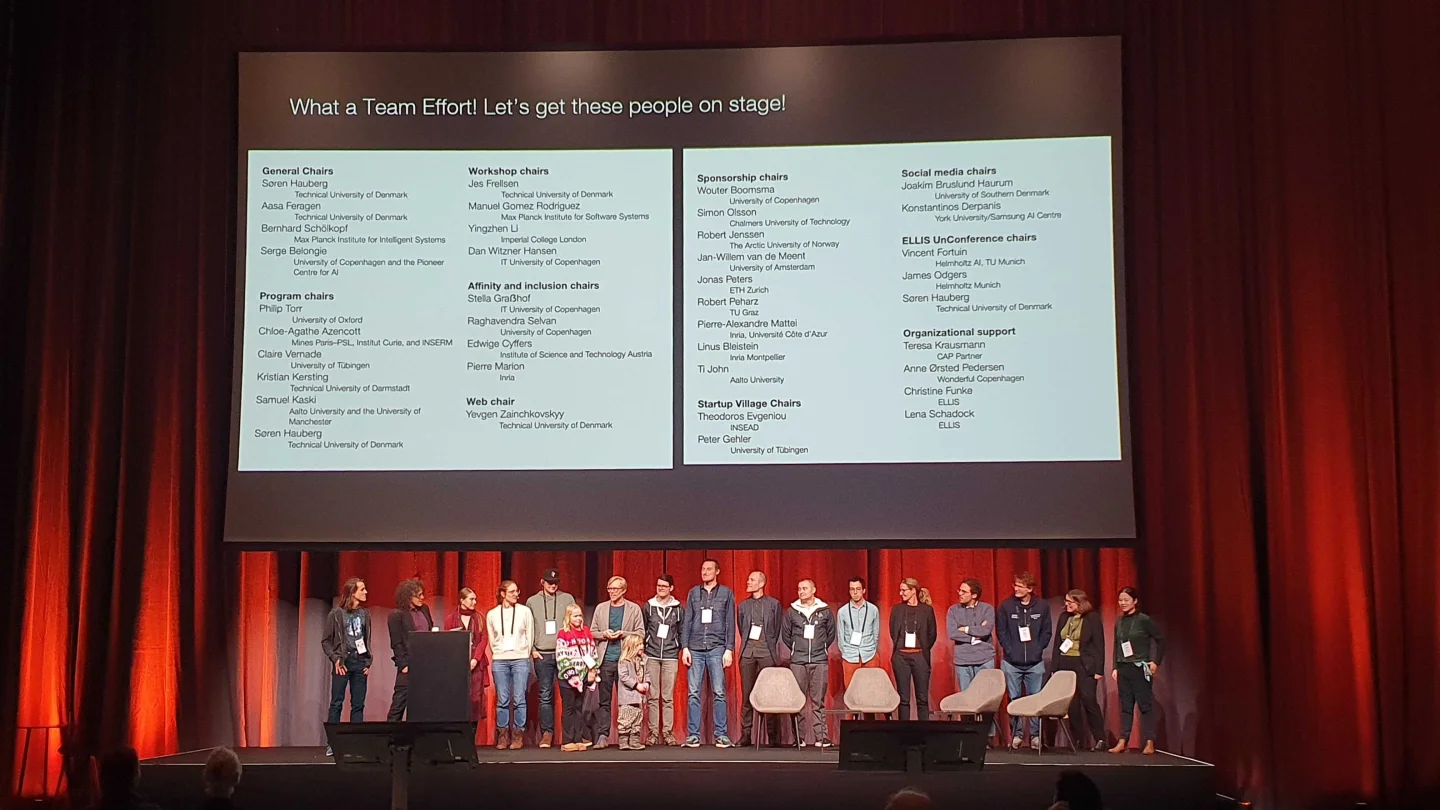
EurIPS was officially endorsed by NeurIPS and took place concurrently with it, allowing authors to also present their NeurIPS-accepted work in Europe. The EurIPS idea and initiative was led by several ELLIS-associated researchers, including the main organisers Aasa Feragen (ELLIS Member, Technical University of Denmark), Søren Hauberg (ELLIS Scholar, Technical University of Denmark), and Serge Belongie (ELLIS Board President, Danish Pioneer Centre for AI & University of Copenhagen), whose vision and leadership helped turn the European AI community’s long-standing request for a local NeurIPS-stage venue into reality.
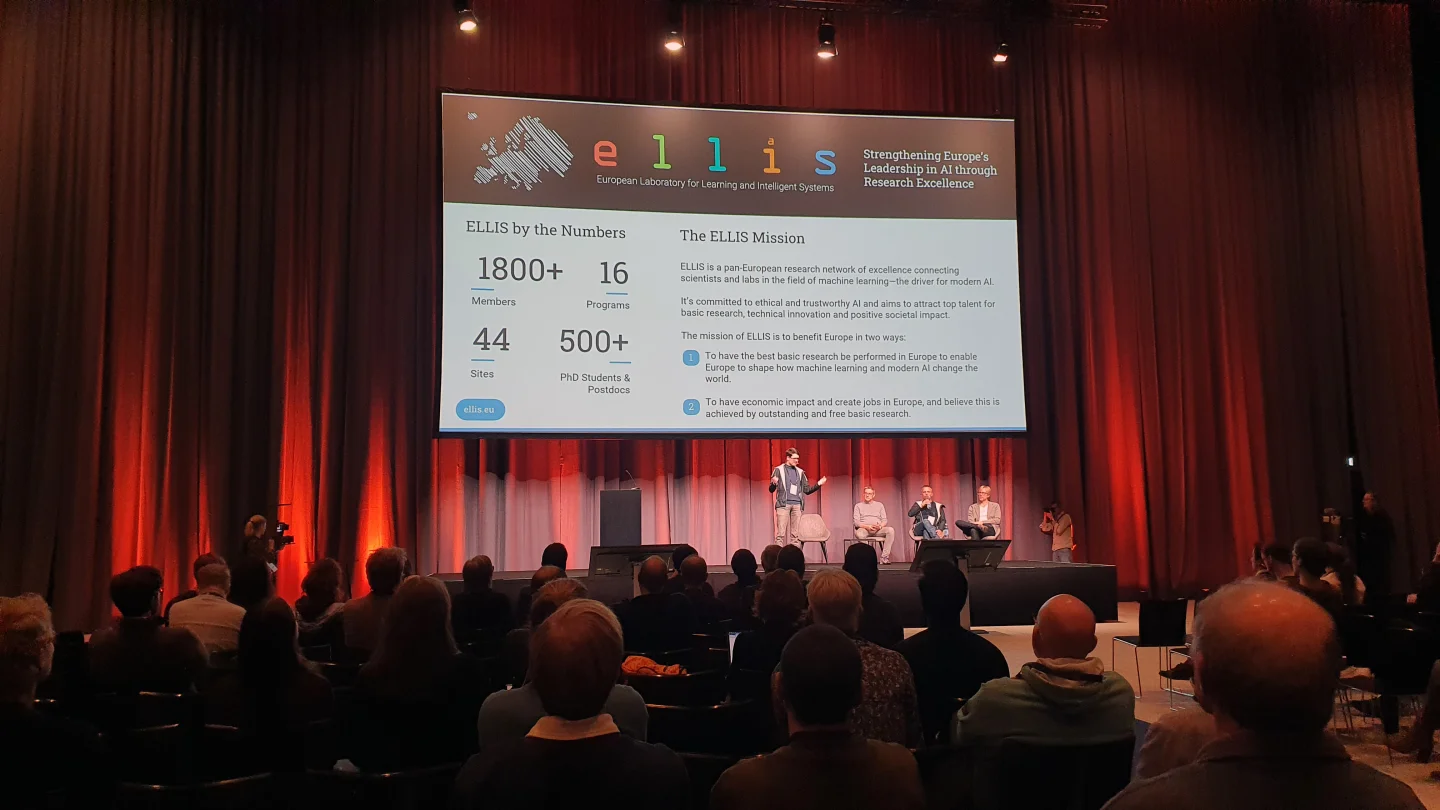
Held on the opening day, the ELLIS UnConference served as the kick-off event for EurIPS. Co-organised by ELLIS-affiliated researchers Søren Hauberg, Vincent Fortuin (ELLIS Scholar, University of Technology Nuremberg), and James Odgers (ELLIS Member, Helmholtz Munich), together with ELLIS PR leads Christine Funke and Lena Schadock (both Max Planck Institute for Intelligent Systems), it set the tone for the week by emphasising collaboration, openness, and community ownership - values that closely reflect ELLIS’s mission to strengthen excellent, human-centred AI research across Europe.
ELLIS played a central role throughout the week: organising the UnConference, co-organising and supporting EurIPS, and contributing substantial scientific and organisational leadership through its Members, who were deeply involved in programme design, workshops, and community activities.
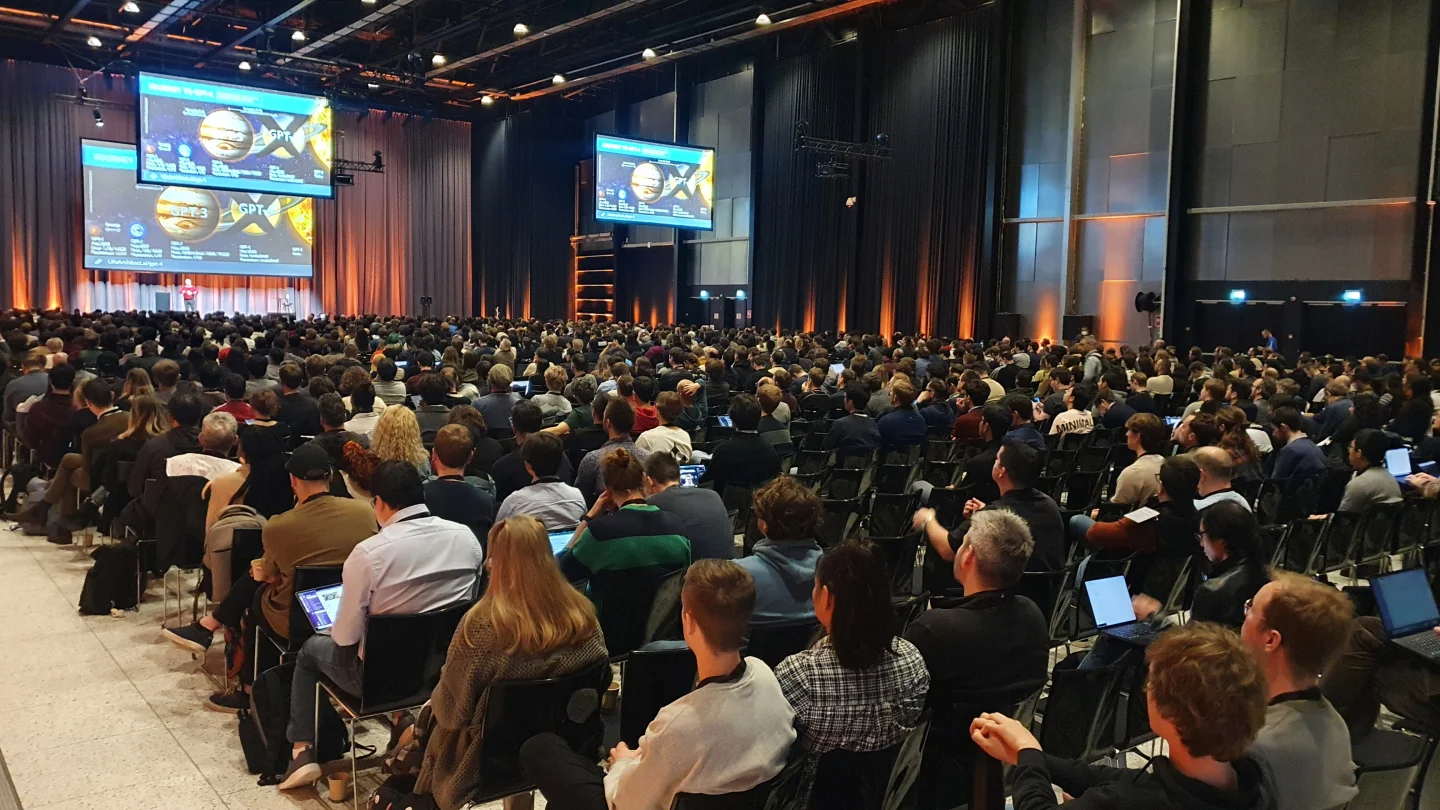
With approximately 2,200 attendees, EurIPS significantly exceeded its initial participation targets. Registration sold out ahead of time, clearly demonstrating the demand for a high-quality, European-based venue for high-class machine learning research.
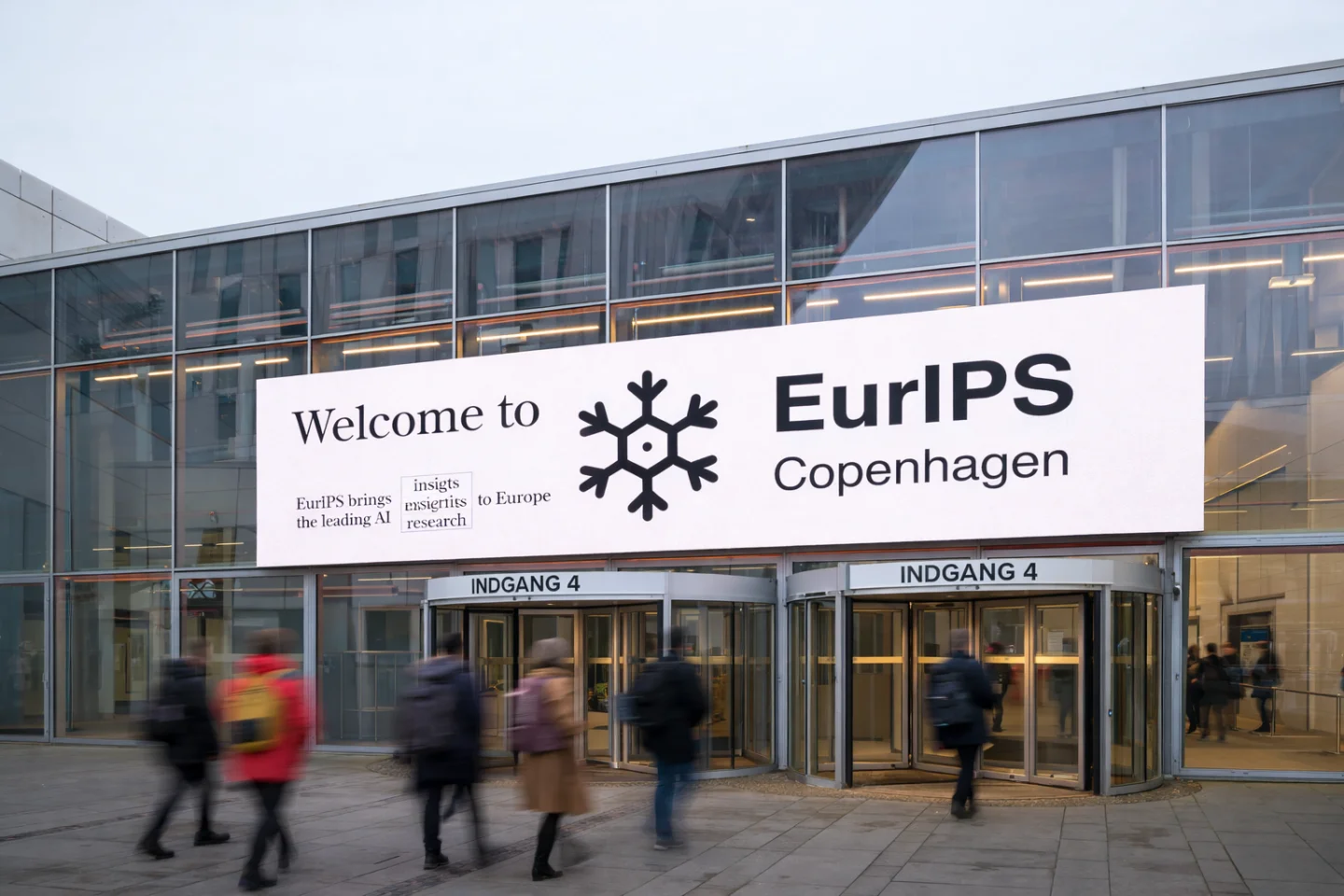

How the Week Unfolded
The week was carefully structured to move from broad, open exchange toward focused scientific discussion. It began on Monday, December 2, with the ELLIS UnConference, which was open to all EurIPS participants at no additional cost. The morning featured seven workshops, five hosted by ELLIS Programs and two organised by members of the broader machine learning community.
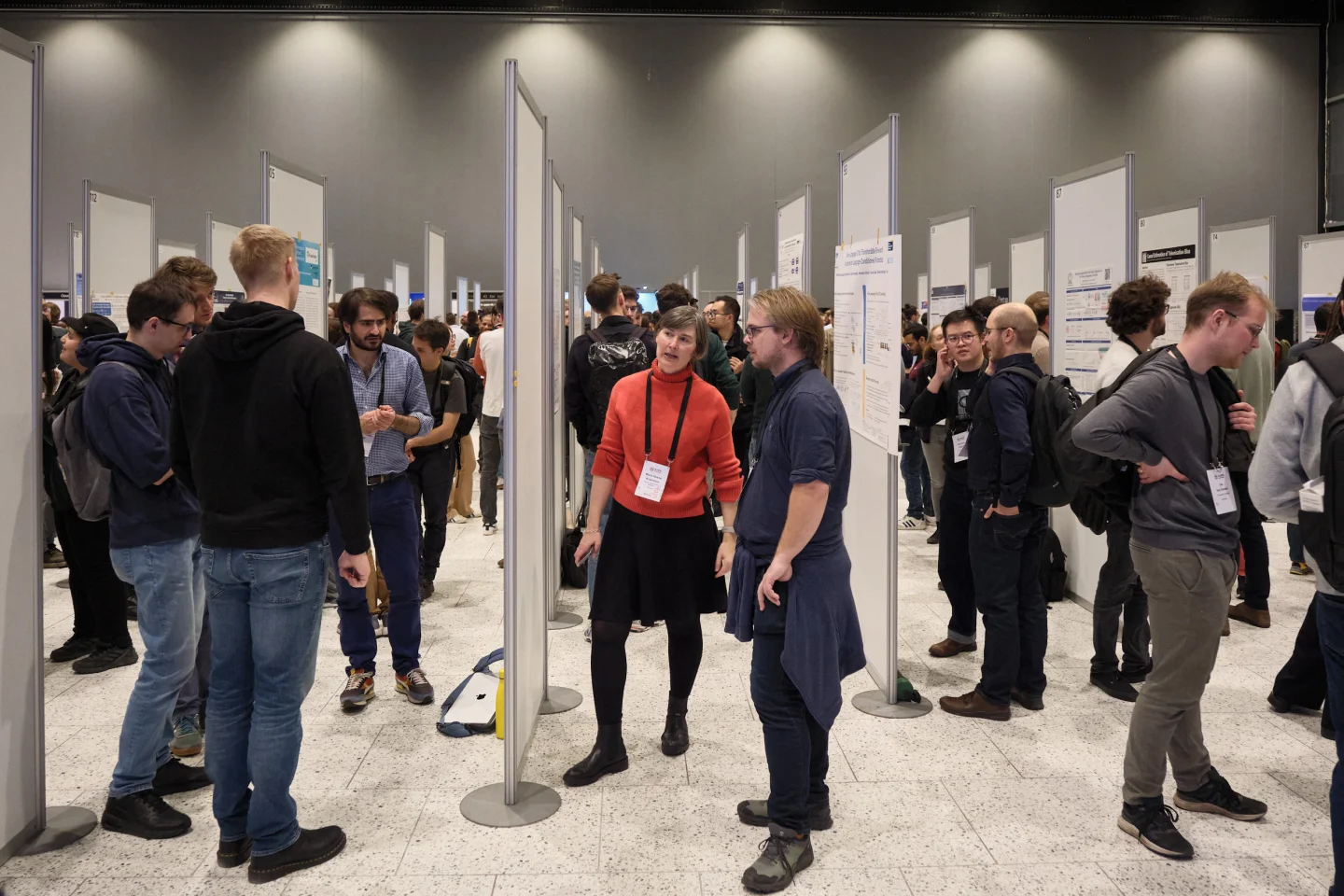
In the afternoon, attention shifted to an open poster session, providing researchers an additional stage to present work published in top journals and conferences throughout 2025. With 129 accepted posters presented in a single-track format, the session became one of the most animated moments of the week, fostering in-depth discussion across fields and career stages. The day concluded with a welcome reception, transforming the venue into a dense network of conversations that continued throughout the week and formally marked the start of EurIPS.
From Tuesday to Thursday (December 3-5), EurIPS filled the Bella Center with a full scientific programme, including keynote talks, oral presentations, and extensive poster sessions based on NeurIPS-accepted work. The week concluded with two days of community-organised workshops (December 6-7), offering nearly 20 sessions designed for deeper engagement, interdisciplinary exchange, and forward-looking discussion, providing a slower, more reflective pace than the main conference days.
Keynotes and Posters: Driving Scientific Exchange
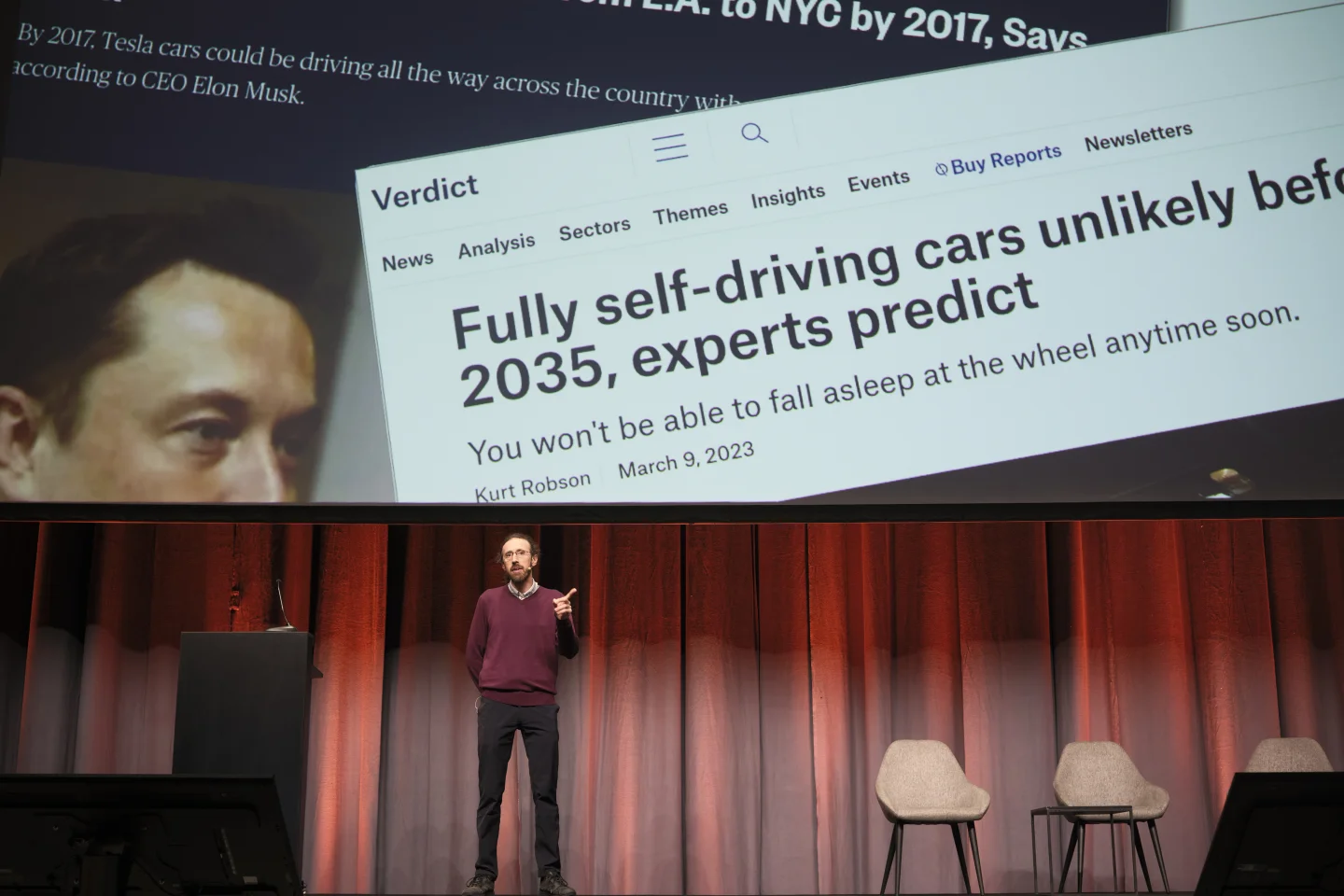
Across EurIPS, the scientific programme showcased the state of the art in machine learning research, combining foundational questions with applied challenges and often bridging theory, systems, and societal impact. The conference featured a stellar roster of keynote speakers, each offering distinct perspectives on current and emerging issues in the field, including:
Emtiyaz Khan (RIKEN center for Advanced Intelligence Project, Japan) — argued for adaptive, continually learning AI systems as a sustainable alternative to compute-intensive training, introducing variational Bayesian “posterior correction” methods that enable efficient adaptation across settings such as continual and federated learning, unlearning, and model merging (chaired by ELLIS Scholar Claire Vernade, University of Technology Nuremberg).
Sepp Hochreiter (ELLIS Fellow, Johannes Kepler Universität Linz) — presented a new generation of efficient AI architectures, introducing xLSTM and the TiRex time-series model as sustainable, low-energy alternatives to attention-based systems, enabling strong reasoning performance, long-horizon modeling, and real-time deployment in industrial and edge settings (chaired by Stella Graẞhof, IT University of Copenhagen).
Michael I. Jordan (INRIA & University of California, Berkeley) — explored an economic perspective on AI, and intelligence as a system-level phenomenon, arguing that learning-based technologies must account for social, economic, and cooperative dynamics, and highlighting how concepts from economics can inform the design of robust, value-driven machine learning systems (chaired by ELLIS Member Edwige Cyffers, ISTA).
Judith Rousseau (Paris Dauphine University & University of Oxford) — reviewed recent advances in semiparametric Bayesian inference, focusing on methods to construct reliable credible regions and address challenging cases where nuisance parameters or boundary conditions complicate inference, including applications to multivariate Hawkes processes (chaired by ELLIS Member Wouter Boomsma, University of Copenhagen).
Gaël Varoquaux (ELLIS Fellow, INRIA) — delivered the closing keynote on “Uncertainty in the LLM Era — Science, More Than Scale”, discussing how uncertainty in black-box models can be quantified and decomposed, and how theoretical insights can guide the design of more reliable AI systems (chaired by Yingzhen Li, Imperial College London).
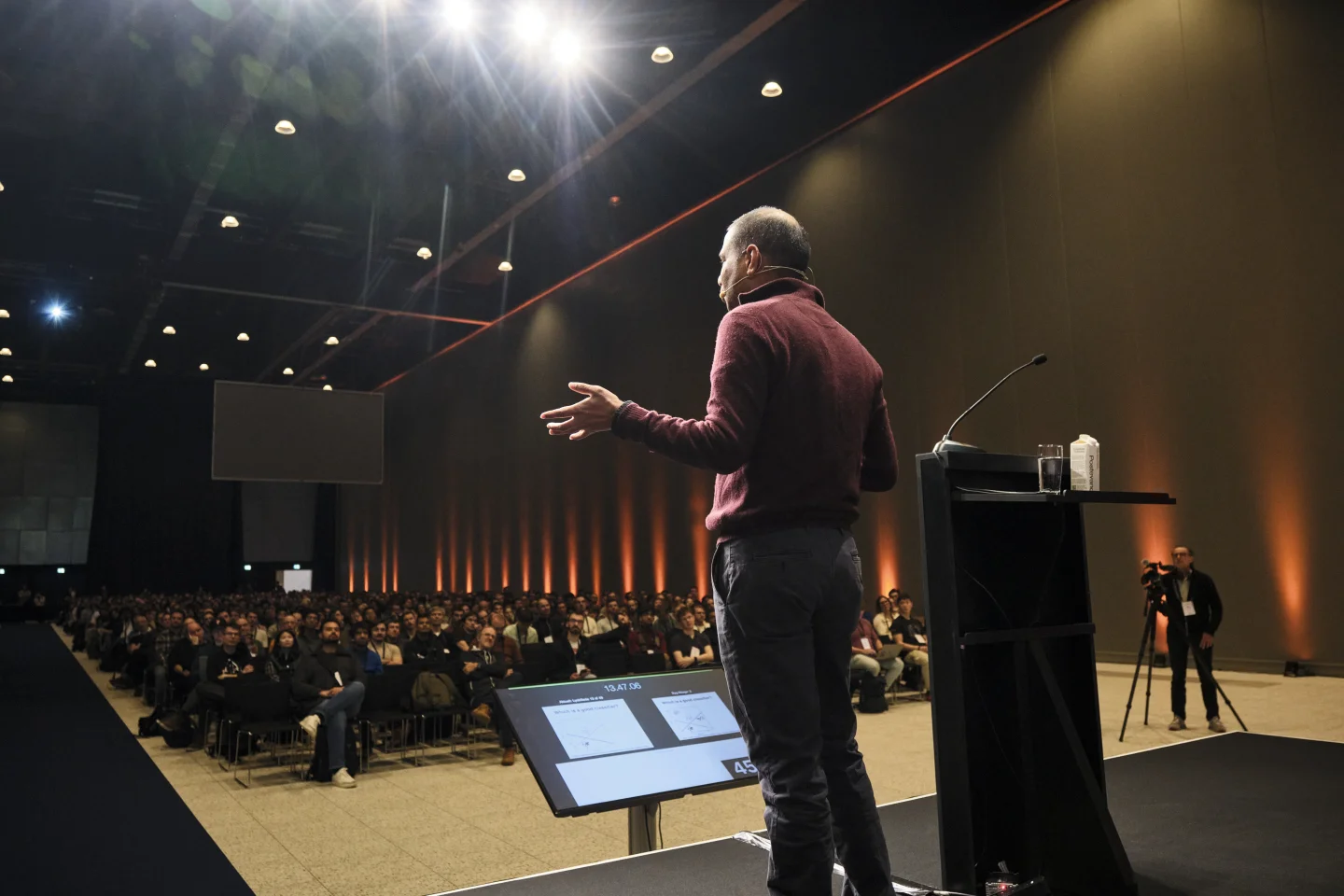
The poster sessions held throughout the main conference days, quickly became central hubs of scientific exchange. These sessions were high-traffic, high-engagement spaces where researchers challenged assumptions, compared methods, and initiated collaborations.
As attendee Amelie Wührl (IT University of Copenhagen) reflected:
I feel like at big conferences it’s hard to have meaningful conversations and interactions because it’s so crowded. So I really appreciate a smaller event where you can chat to people in a more relaxed environment.
Affinity Workshop by Women in Machine Learning
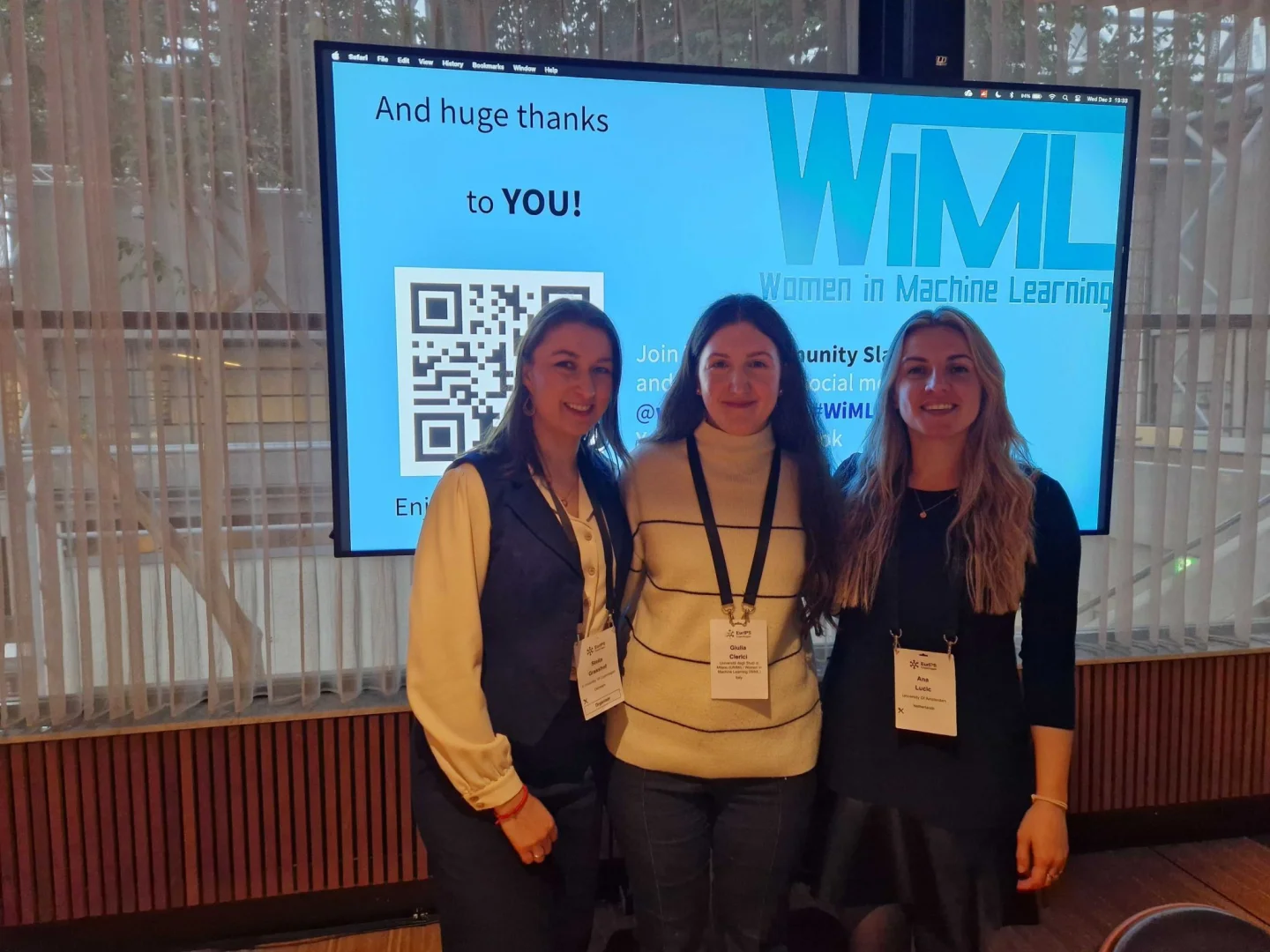
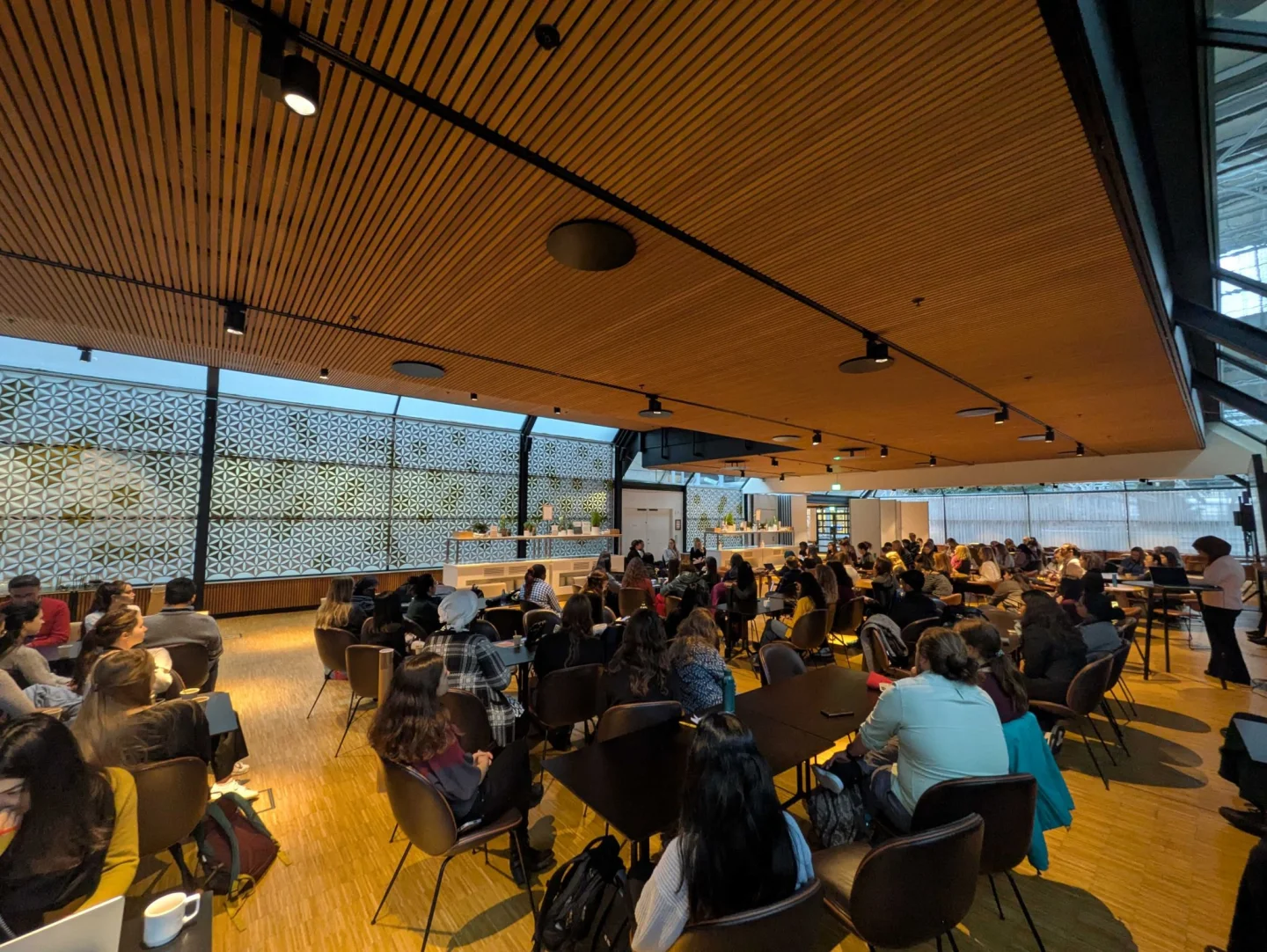
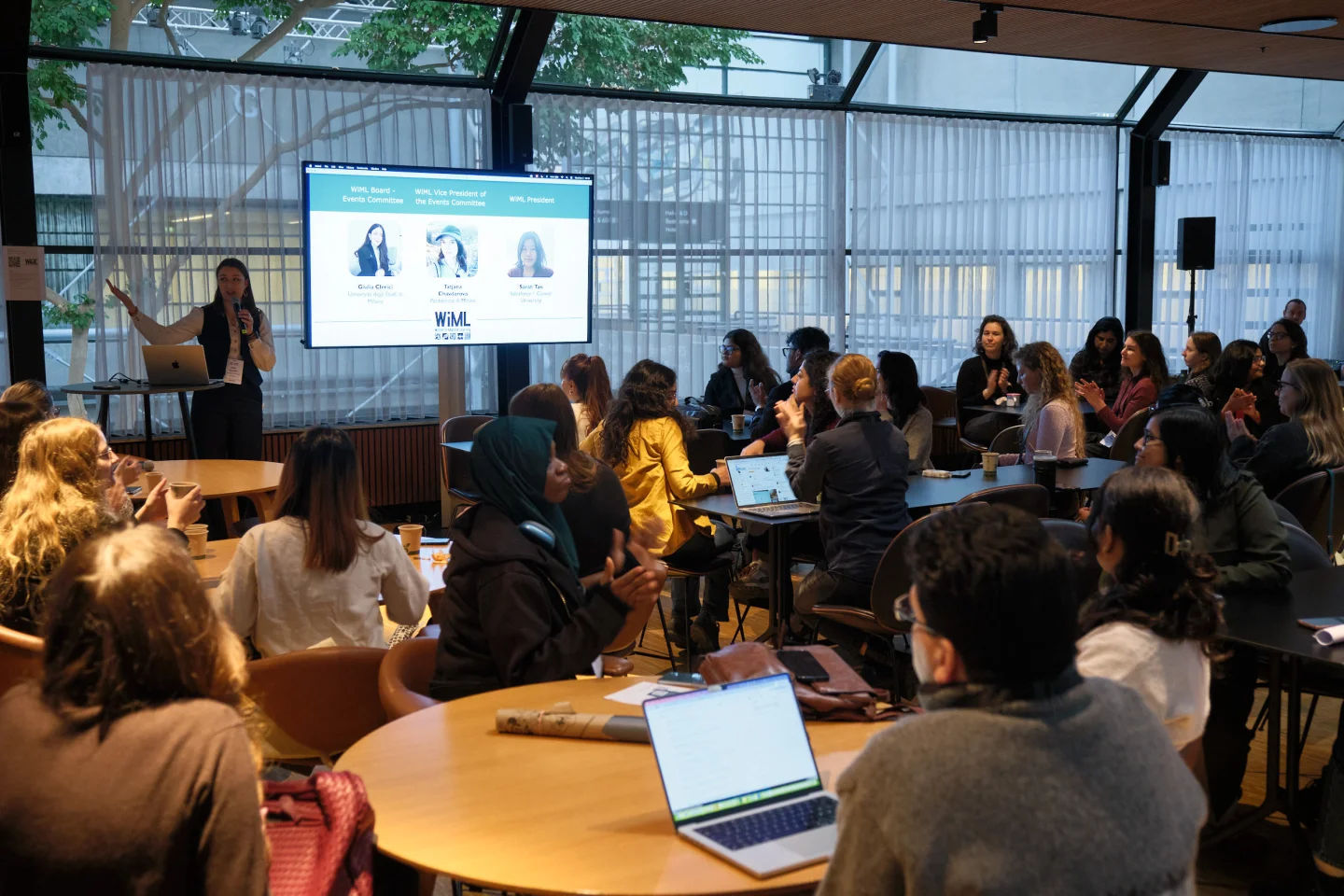
Among the affiliated events, the Women in Machine Learning (WiML) workshop stood out as a highlight of the week’s affinity workshops. By focusing on how to increase the number of women in machine learning, helping them succeed professionally, and ultimately increasing their impact within the wider AI community, WiML aims to build a more diverse and robust ML research landscape.
The event was supported by several ELLIS female Members and jointly organised by Ana Lučić (ELLIS Member, University of Amsterdam) and Stella Graßhof (IT University of Copenhagen), together with WiML Board liaisons Giulia Clerici (Coordinator of the ELLIS Unit Milan, Università degli Studi di Milano), Tatjana Chavdarova (Politecnico di Milano), and Alessandra Tosi (Mind Foundry).
The workshop combined technical depth with career-focused discussion. It featured an invited talk by Lina Jaurigue (Technische Universität Ilmenau) on “Reservoir Computing for On-Device ML for Hearing Aid Improvement”, showcasing applied, resource-efficient approaches to machine learning. A career panel, “Navigating uncertainty and long-term career sustainability in Europe’s evolving ML landscape”, included Isabel Valera (ELLIS Fellow, Saarland University), Lina Jaurigue, and Vinti Agarwal (BITS Pilani), providing candid insights on professional development. Additionally, structured networking and mentoring sessions fostered meaningful connections, while best-poster short talks and a full poster session highlighted cutting-edge research by women in the field.
From Research to Market: Frontier Labs, Networks, and Talent Platforms
Beyond the keynotes, workshops and posters, the programme also highlighted developments in Europe’s research ecosystem. Next Frontier AI, presented by Johannes Otterbach (SPRIND – the Bundesagentur für Sprunginnovationen), is a bold European initiative to support the next generation of AI labs. Launched at EurIPS, it provides €125M in funding through a DARPA-style challenge, giving researcher-founders access to compute, infrastructure, and company-building support to develop frontier AI models, with the goal of creating labs capable of raising up to €1 billion in follow-on capital.
Similarly, the new Pan-European AI Research Entrepreneurs Network, also launched at EurIPS and presented by Theodoros Evgeniou (ELLIS Supporter, INSEAD), is a community‑building initiative that connects AI researchers, founders, and builders across Europe to share experience, support one another, and bridge the gap between research and real‑world impact by fostering peer‑to‑peer support, knowledge exchange, and collaborative entrepreneurship.
Also launched at the EurIPS Startup Village was the ELIAS Startup Opportunities platform – a matchmaking initiative connecting AI researchers, startups, and venture capital across Europe. The platform helps researchers explore entrepreneurial paths, gain experience beyond academia, and collaborate with startups, while enabling companies and investors to access top AI talent from European research labs. ELLIS supports the initiative, reinforcing connections between research excellence and entrepreneurial impact.
The ELLIS Booth — A Constant Point of Contact
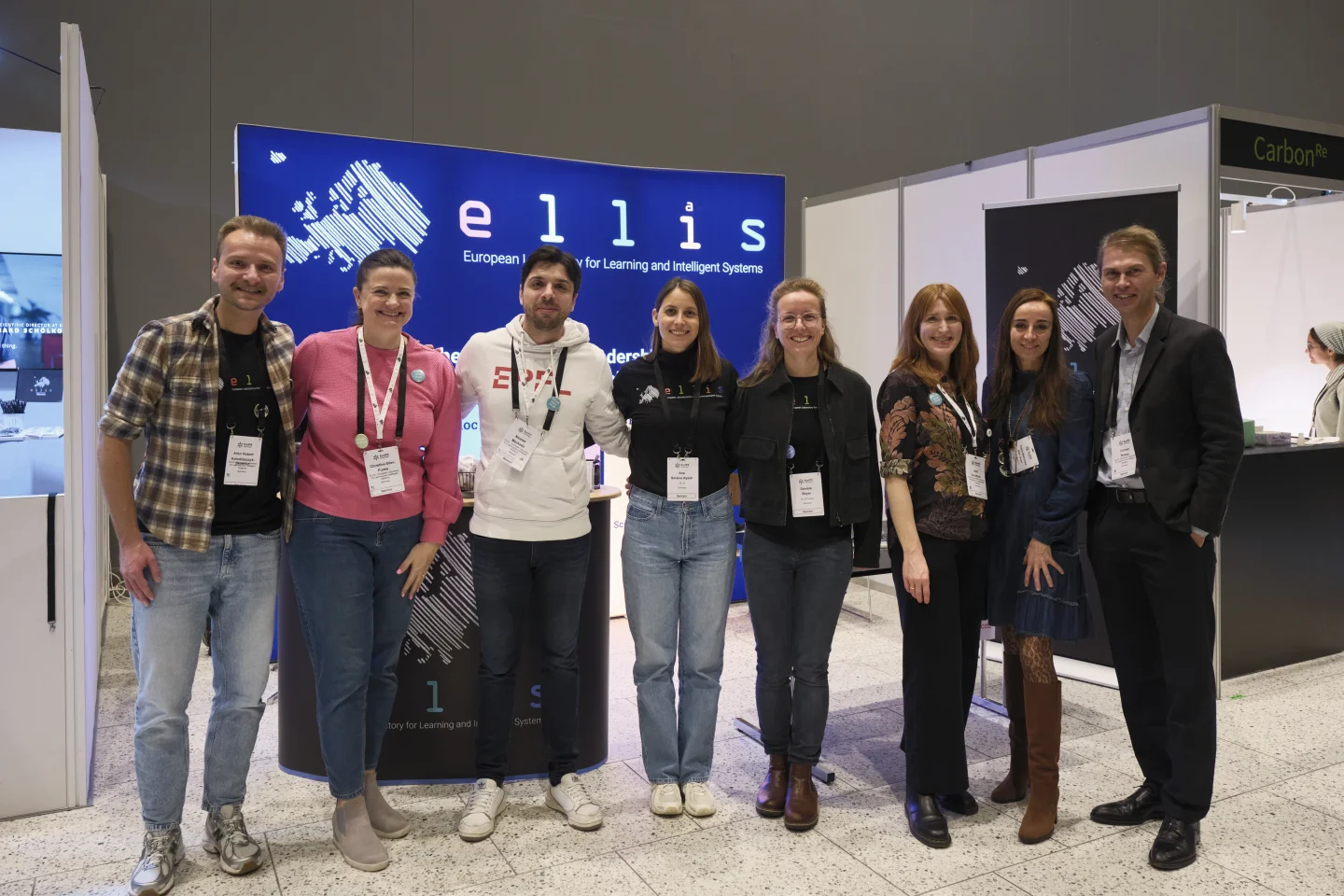
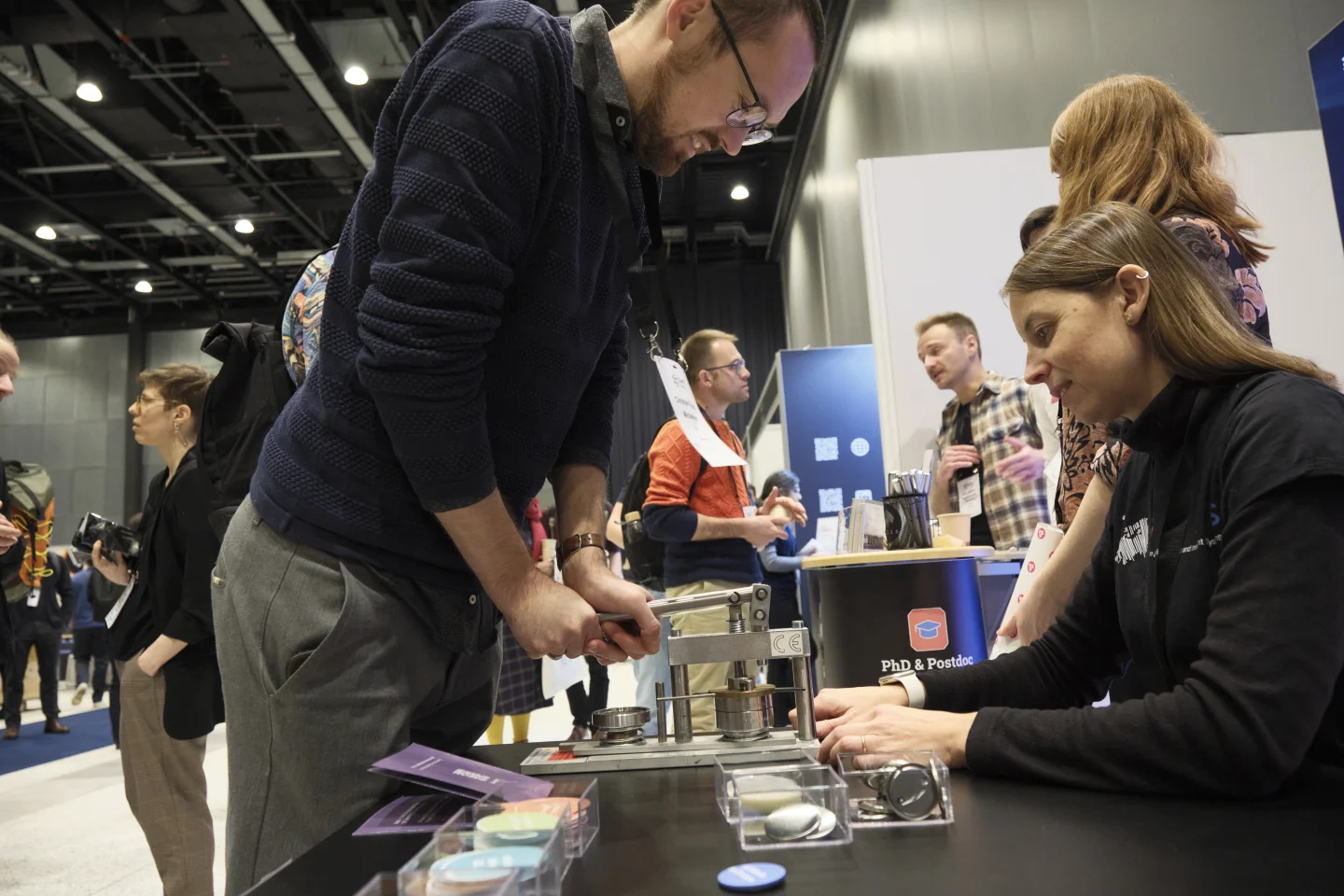
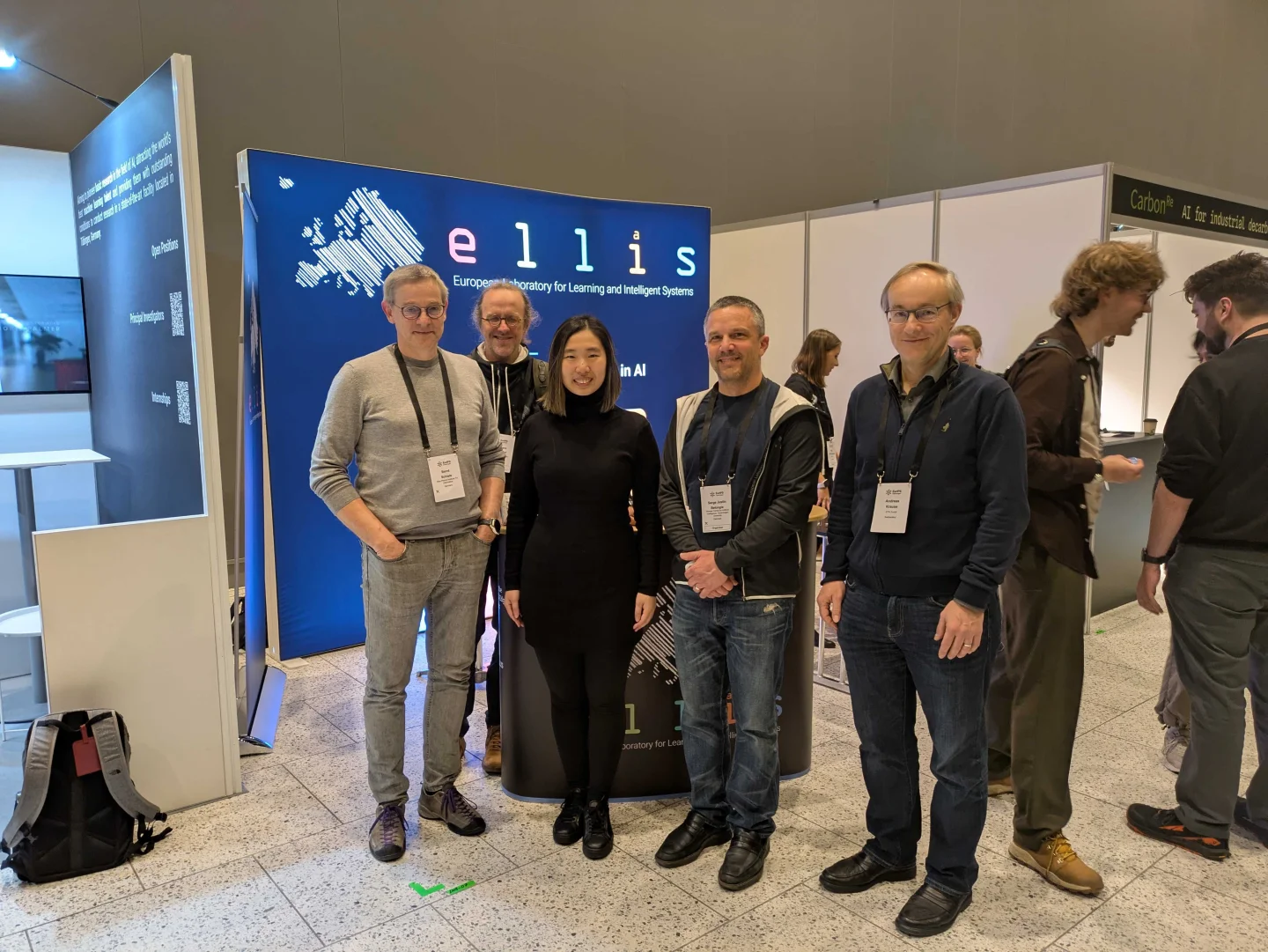
Throughout the ELLIS UnConference and EurIPS, the ELLIS exhibitor booth was one of the most visited spaces outside of the scientific talks and poster sessions, serving as an information hub, meeting point, and informal gathering space for researchers, students, and organisers alike. Its success was driven by the dedication of ELLIS staff, including ELLIS PR leads Christine Funke and Lena Schadock, who organised the booth.
The booth also benefited from the invaluable support of several European ELLIS staff members, including ELLIS COO Celia Sánchez San Juan as well as ELLIS Unit Coordinators Ana Saraiva Ayash (Unit Lisbon), Artur Kołodziejczyk-Skowron (Unit Warsaw), Conrad Philipp (Unit Jena), Daniela Beyer (Unit Heidelberg), and Nicolas Machado (Unit Lausanne), ensuring a welcoming, well-coordinated presence throughout the week and helping attendees learn more about the ELLIS network, and engage with ELLIS initiatives.
Community Feedback and Looking Ahead
Across conversations, surveys, and informal feedback, the response from the community was overwhelmingly positive: both EurIPS and the ELLIS UnConference were widely regarded as a success. Participants praised the scientific quality, the accessibility of a European venue, and the collaborative, inclusive atmosphere. Many described the week as intense but rewarding, a space where meaningful connections were formed and rigorous scientific discussion thrived.
As attendee Luca Viano (EPFL) summarizes:
I already spent this summer in California, the travel is super long and I didn´t feel very excited to go back and forth another time. Moreover, I really liked the program of EurIPS and the ELLIS Unconference and I decided that I couldn't miss it! I really hope there will be a second edition of EurIPS next year.
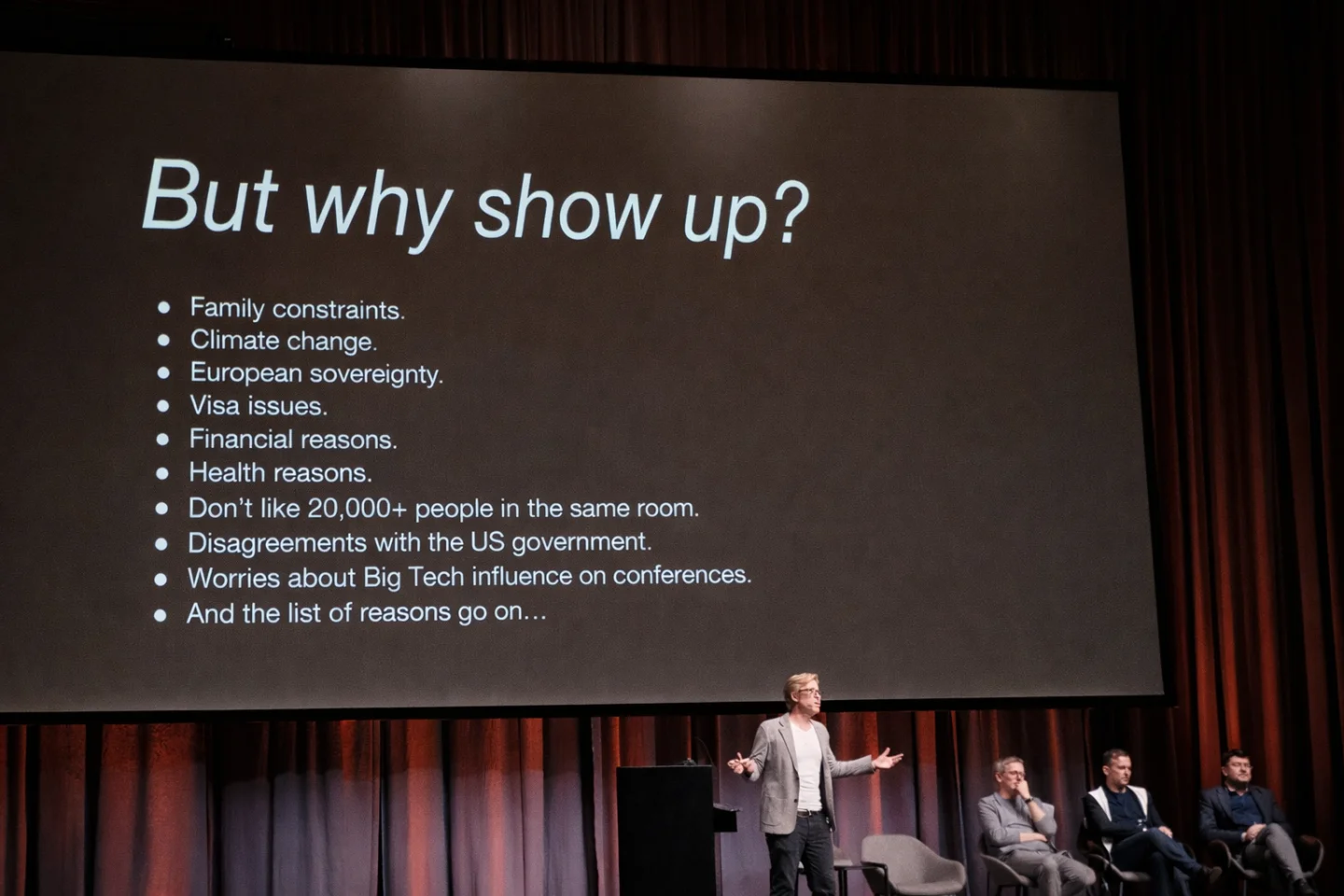
The week in Copenhagen demonstrated that a European, community-driven satellite to NeurIPS is both viable and valuable. At the same time, it highlighted the need for robust infrastructure to support events of this scale, including unified budgeting, strong host teams, and venues capable of accommodating a large number of workshops and participants.
📖 For readers seeking more detail, the official EurIPS Organising Report provides an in-depth overview of the conference structure, logistics, and outcomes.
👇 To get a more visual sense of the community atmosphere on site and how participants experienced the event, watch the EurIPS aftermovie below.
Acknowledgements
We would like to express our sincere appreciation to our financial supporters, the Max Planck Institute for Intelligent Systems and the Ministry of Science, Research and the Arts of Baden-Württemberg. Their generous support to ELLIS made our participation in this outstanding community event possible and enabled us to organise the well-received ELLIS UnConference kick-off. Without their crucial contribution, our presence and community-building activities at EurIPS would not have been possible.
We extend our sincere thanks to Christoffer Regild for his exceptional creative work in capturing and producing the accompanying aftermovie and photographs.
We gratefully acknowledge the support and expertise of CAP Partner, whose contribution was instrumental to the success of both events, and extend our special and sincere thanks to CAP Managing Director and Partner Teresa Krausmann for her outstanding leadership and exceptional work throughout.