

ELLIS Unit Jena: AI for Climate and Earth System Science
Mission & Vision
The ELLIS Unit Jena is a research hub at the interface of machine learning, artificial intelligence, and earth and environmental sciences. Its core mission is to combine fundamental AI research with real-world challenges related to climate, biodiversity, environmental dynamics, and complex Earth systems. The Unit focuses especially on interpretable and trustworthy AI, causal modeling, hybrid approaches that integrate scientific knowledge into AI systems, uncertainty quantification, and spatio-temporal machine learning for complex dynamical systems.
A major long-term vision is to advance “AI for Earth and Sustainability Science” while simultaneously contributing foundational machine learning innovations inspired by scientific challenges arising from geosciences and climate research. Through this work, the Unit aims to enable better scientific understanding, improved policy decisions, and more effective societal responses to climate change and environmental crises.
Key Numbers & Achievements
The ELLIS Unit Jena officially became an ELLIS Unit on November 1st, 2021. It brings together researchers from Friedrich Schiller University Jena, the Max Planck Institute for Biogeochemistry, and the German Aerospace Center (DLR), forming a strongly interdisciplinary environment at the interface of artificial intelligence, Earth system science, and environmental research.
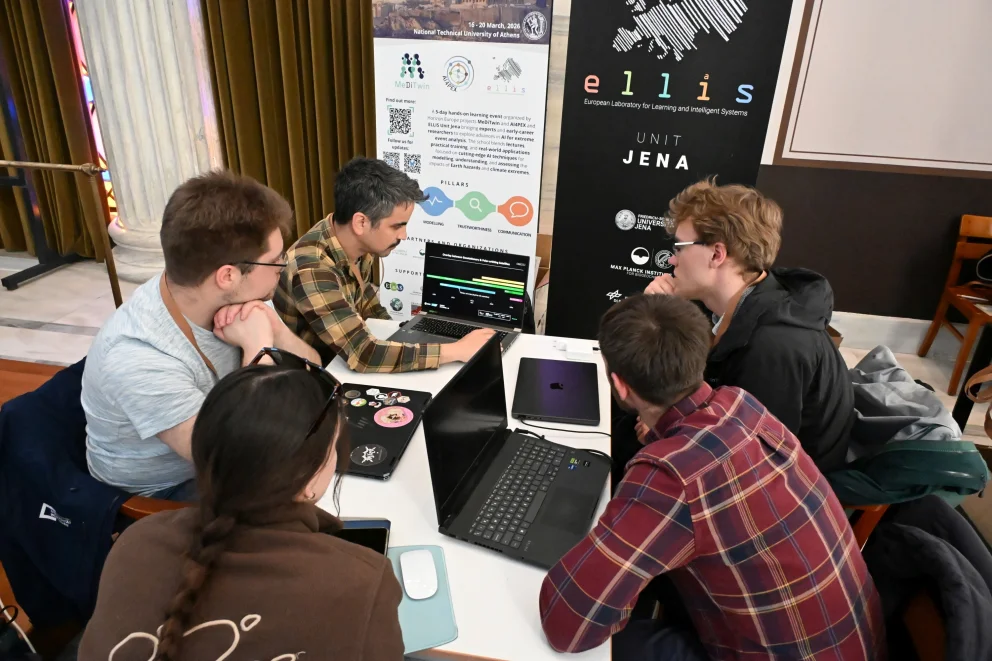
Since its establishment, the Unit has reached several key milestones and has been actively engaged in the ELLIS ecosystem. These include participation in the ELLIS PhD and Postdoc Program, the organization of international webinars and workshops, and active contributions to ELLIS Programs, in particular the “Machine Learning for Earth and Climate Sciences” program. In addition, the Unit is involved in European AI initiatives such as ELISE, ELIAS, and ELSA, and contributes to international training activities, including an ELLIS Summer School in September 2025 and an ELLIS Winter School in March 2026 in Athens. The Unit is also proud to host the ELLIS Doctoral Symposium 2027, further strengthening its role within the ELLIS network and its commitment to fostering early-career research excellence in artificial intelligence across Europe.
The motivation for joining ELLIS was to strengthen Europe’s international leadership in human-centered and scientifically grounded artificial intelligence, while fostering interdisciplinary collaboration between AI research and Earth system science. Through its activities, the Unit continues to build bridges between methodological AI development and pressing scientific and societal challenges in climate and environmental research.
As Markus Reichstein (Max Planck Institute for Biogeochemistry), Unit Co-Director of ELLIS Unit Jena, says:
AI is one of today’s most groundbreaking technologies. Its potential for helping with the climate and biodiversity crises seems infinite, e.g. for early warning systems, sustainable resource use or detection of climate extremes and their impacts.
And ELLIS Unit Jena Co-Director Joachim Denzler (University of Jena) adds:
I am glad to see that we are already on the map of Europe’s most excellent research units for environmental AI. With the support of the Carl-Zeiss-Stiftung, the Friedrich Schiller University Jena, and the EU commission, this will only grow in the future. Our impact even goes beyond Earth sciences: For instance, the machine learning methods we develop in this context are already applied to data from medicine and psychology.
Research Areas
The core research areas of the ELLIS Unit Jena include causal inference and causal modeling, hybrid AI approaches that integrate mechanistic and machine learning models, explainable and interpretable AI, uncertainty quantification, spatio-temporal machine learning, machine learning for Earth and climate science, and AI for sustainability and environmental research.
The Unit focuses in particular on five major challenge areas:
Interpretability
Physical consistency
Complex and uncertain data
Limited labels
Computational demand
Through this work, the Unit contributes both to advancing fundamental machine learning methods and to improving scientific understanding of complex Earth system processes. A central research direction is the development of hybrid AI methods that combine physical knowledge with data-driven learning to improve robustness, generalization, and scientific consistency in climate and environmental modeling. Another major focus is causal machine learning, where the Unit develops methods to better understand interactions and feedback mechanisms in complex dynamical systems. Research on uncertainty-aware AI and interpretable machine learning further supports trustworthy and scientifically meaningful AI applications, particularly in high-impact domains such as climate science and sustainability research.
The Unit’s work has resulted in numerous high-impact publications and interdisciplinary collaborations at the intersection of AI and Earth system science. Highlight publications include contributions on physics-informed and hybrid machine learning for climate modeling, causal discovery in complex systems, and uncertainty quantification for environmental prediction tasks. These efforts position the ELLIS Unit Jena as a leading center for advancing scientifically grounded and societally relevant AI research.
Research Highlights
The ELLIS Unit Jena has established internationally visible expertise in AI for Earth system science, causal machine learning, hybrid AI approaches, uncertainty-aware AI, and interpretable machine learning. Major achievements include more than 80 collaborative publications with other ELLIS fellows and scholars, contributions to ELLIS Programs and European AI initiatives, the organization of international webinar series and schools, interdisciplinary collaboration across AI and environmental sciences, and the successful integration of AI methods into climate and Earth system research.
A central strength of the Unit lies in advancing AI methods that are tightly coupled with real-world Earth system and scientific challenges, particularly in climate dynamics, remote sensing, and large-scale environmental monitoring. This is reflected in a series of high-impact publications across leading journals. Among the most notable contributions are pioneering works on hybrid AI methods that combine physical process understanding with machine learning for climate and Earth system modeling, including physically consistent global atmospheric data assimilation using machine learning in latent space (Fan et al., 2026, Science Advances: https://doi.org/10.48550/arXiv.2603.04395), and physics-guided machine learning approaches for snow water equivalent estimation (Zhao et al., 2026, Water Resources Research: https://doi.org/10.1029/2025WR041406).
Further key contributions include advances in Earth system dynamics and biosphere monitoring, such as the identification of a global shift in vegetation dynamics captured through the “green wave” trajectory (Mahecha et al., 2026, PNAS: https://doi.org/10.1073/pnas.2515835123), as well as remote sensing-driven biodiversity and trait mapping at global scale using machine learning and multi-source data fusion (Moreno-Martínez et al., 2026, Nature Communications: https://doi.org/10.1038/s41467-026-72111-6).
The Unit has also contributed strongly to climate extremes and hydrological processes, including studies on circulation-driven European heat extremes (Carvalho-Oliveira et al., 2026, Environmental Research Letters: https://doi.org/10.1088/1748-9326/ae499b) and rainfall-driven nutrient transport dynamics in river systems (Chen et al., 2026, Journal of Hydrology: https://doi.org/10.1016/j.jhydrol.2026.135151).
In addition, methodological advances in nonlinear systems and statistical learning have been developed, such as kernel-based approaches for detecting long-range persistence in complex systems (Williams et al., 2026, Chaos: https://doi.org/10.1063/5.0316179), and Bayesian spatial modeling techniques addressing uncertainty and missing data in environmental systems (Wijayawardhana et al., 2026, Spatial Statistics: https://doi.org/10.1016/j.spasta.2026.100966).
On the computer vision and AI methods side, the Unit has contributed to foundational advances in point cloud representation learning for 3D data understanding (Wei et al., 2026, Scientific Reports: https://doi.org/10.1038/s41598-026-47484-9), strengthening its profile in interpretable and structured representation learning for scientific applications.
Finally, the Unit continues to strengthen its role at the intersection of machine learning and geoscience through remote sensing-based drought monitoring using sun-induced fluorescence (Wohlfahrt et al., 2026, Remote Sensing of Environment: https://doi.org/10.1016/j.rse.2026.115370), further demonstrating the integration of AI into scalable Earth observation systems.
Through these activities, the ELLIS Unit Jena has become a recognized hub for scientifically grounded and societally relevant AI research, combining methodological innovation with impactful applications in Earth system science.
Ongoing Research Projects
The ELLIS Unit Jena is involved in numerous interdisciplinary and international research activities spanning AI for Earth and climate science, machine learning for environmental monitoring, causal and hybrid AI research, AI methods for hydro-climatic extremes, and scientific machine learning for sustainability research. Many of these projects address fundamental methodological challenges while simultaneously contributing to a better understanding of climate and environmental processes.
A major focus lies on developing robust and interpretable AI methods that can integrate physical knowledge, deal with uncertainty, and support scientific discovery in complex dynamical systems. The Unit maintains active collaborations within the ELLIS network through participation in several ELLIS Programs and joint initiatives with other ELLIS Units and Fellows. Beyond ELLIS, researchers from the Unit are involved in major European projects and networks, including ELISE, ELIAS, and ELSA, as well as collaborations with universities, research institutes, and interdisciplinary centers across Europe. These activities connect expertise from artificial intelligence, geosciences, climate science, environmental sciences, and sustainability research, enabling the development of innovative AI approaches for societally relevant challenges.
The Unit is also actively engaged in flagship initiatives such as GENAI-X, further strengthening its role in advancing cutting-edge generative AI methods in scientific and interdisciplinary contexts. In addition to its research activities, the ELLIS Unit Jena plays an active role in scientific networking and training.
Collaborating across ELLIS
The ELLIS Unit Jena is strongly connected to the broader ELLIS ecosystem through a wide range of collaborative activities and joint research initiatives. A central component of these activities is the ELLIS Program “Machine Learning for Earth and Climate Sciences,” which brings together researchers from multiple ELLIS Units to advance AI methods for climate and environmental applications. Through this program and related collaborations, the Unit contributes to the development of scientifically grounded machine learning approaches for complex Earth system challenges.
The Unit regularly collaborates with other ELLIS Fellows and Scholars through joint research projects, collaborative publications, researcher exchange, and pan-European PhD activities. These collaborations foster interdisciplinary exchange between AI, climate science, geosciences, and sustainability research, while also strengthening methodological advances in areas such as causal machine learning, hybrid AI, uncertainty quantification, and interpretable AI.
In addition, the ELLIS Unit Jena actively contributes to the European AI community by organizing and participating in workshops, webinar series, summer schools, and scientific events across the ELLIS network. These activities promote scientific exchange, support early-career researchers, and help build long-term collaborations between ELLIS Units and partner institutions throughout Europe.
Support for Young Talents
Supporting young researchers is a core priority of the ELLIS Unit Jena. Activities include participation in the ELLIS PhD and Postdoc Program as well as the IMPRS program, close supervision of PhD candidates and postdocs, and a strong commitment to interdisciplinary training and mentoring.
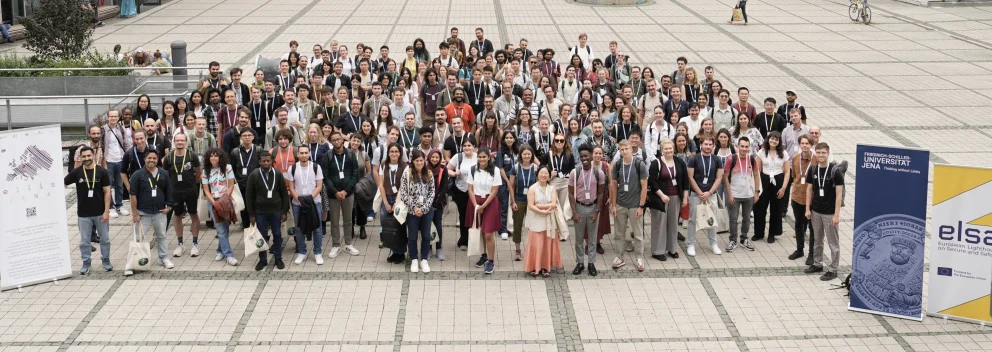
The Unit regularly organizes international summer schools, winter schools, workshops, and symposia, creating structured opportunities for scientific exchange and advanced training across AI, Earth system science, and related disciplines. Through these activities, the Unit fosters extensive networking opportunities across Europe and aims to create an attractive and supportive environment for outstanding talents at all career stages, from PhD students to faculty-level researchers.
In addition, the Unit is actively engaged in international outreach and scientific communication. This includes contributions to major scientific and policy-relevant forums such as the AI for Good Global Summit and the European Geosciences Union (EGU) General Assembly, where researchers present advances at the interface of artificial intelligence, climate science, and sustainability.
Through these engagements, the ELLIS Unit Jena strengthens the visibility and societal impact of its research while promoting responsible and scientifically grounded AI for global challenges.
Efforts in Public Engagement
Efforts in public engagement are a central part of the ELLIS Unit Jena’s activities. The Unit actively engages with policymakers, industry partners, NGOs, students, and the general public to communicate advances in artificial intelligence and their relevance for climate, sustainability, and environmental challenges.
Its outreach work includes public talks and lectures, participation in science festivals and exhibitions, AI communication formats related to climate and Earth system science, as well as interdisciplinary dissemination activities aimed at making complex AI research accessible and societally relevant.
A key aspect of these activities is strong local anchoring in Jena’s scientific and innovation ecosystem. This includes collaborations with institutions such as the Carl-Zeiss-Stiftung and participation in city-organized science and culture events such as the “Lange Nacht der Wissenschaften” in Jena and GIS Day Jena, where the Unit contributes with research presentations and interactive formats on geospatial AI and environmental modeling.
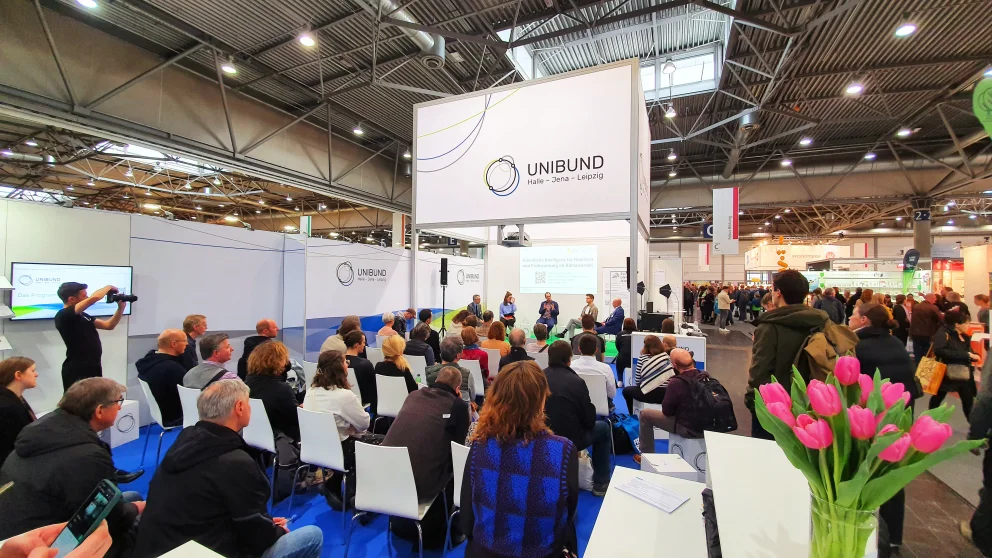
The Unit also regularly contributes to public lectures and outreach events at Friedrich Schiller University Jena, engages in interviews on climate and AI topics for local and national media, and participates in major national and international platforms. Notable examples include hosting and contributions to the German government’s Digital Summit 2023, outreach activities at the Leipzig Book Fair (Germany’s second largest book fair), and participation in global forums such as the AI for Good Global Summit.
The Unit also maintains a strong presence in ongoing scientific communication and event formats, including the ELLIS Summer School on AI for Earth and Climate Sciences (September 2025), the ELLIS Winter School on AI for Earth System, Hazards & Climate Extremes (March 2026), regular interdisciplinary workshops and symposia, and recurring webinar series such as “AI for Earth and Sustainability Science” (since 2023).
Through this broad range of activities, the ELLIS Unit Jena aims to make AI research more transparent, understandable, and societally relevant, with a particular focus on its applications to climate change, sustainability, and environmental systems.
View the highlights summary:
Text written by ELLIS Unit Jena Coordinator Conrad Philipp.