

ELLIS Unit Graz: Foundational Machine Learning, from Brain-Inspired to Trustworthy AI
Mission & Vision
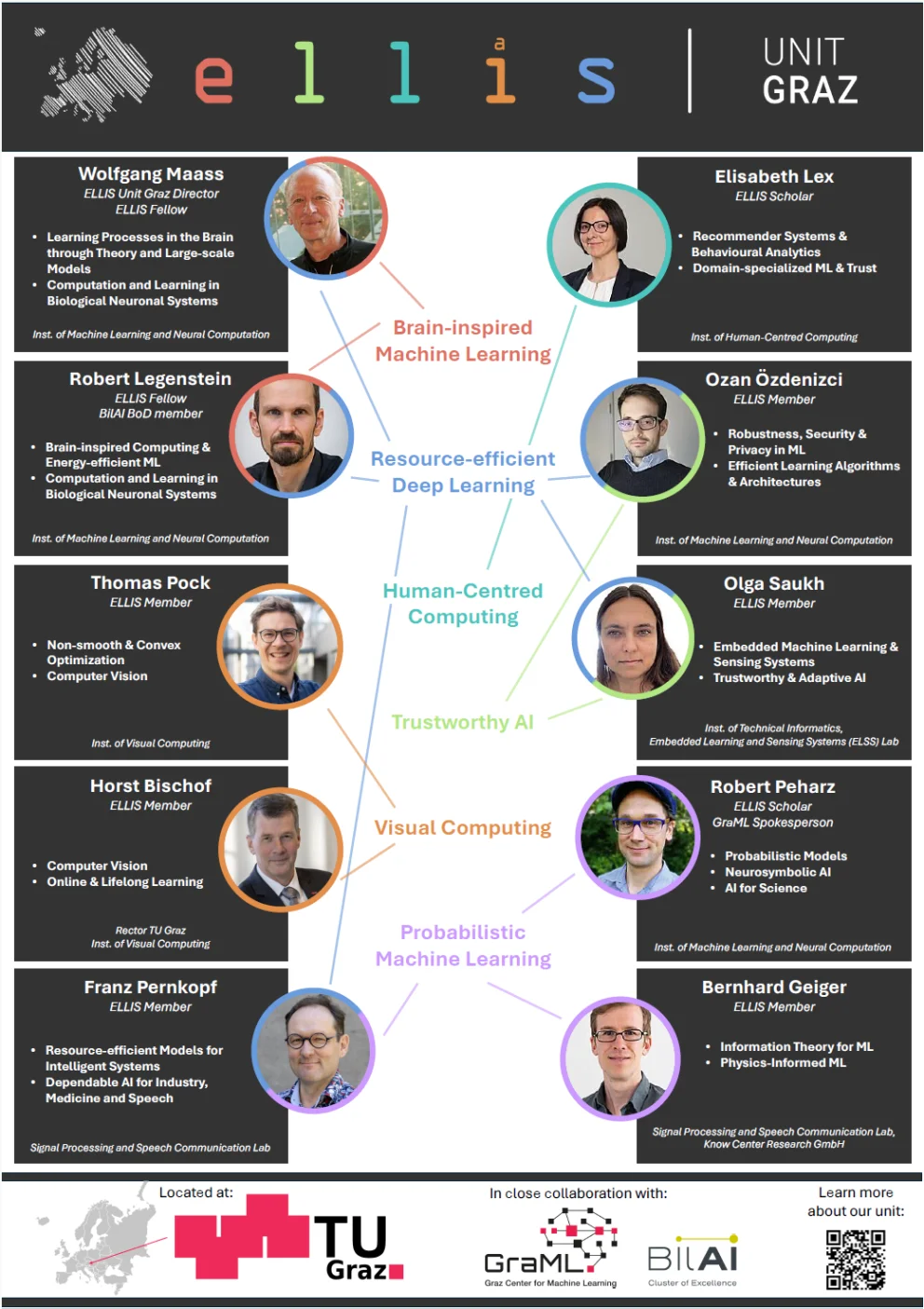
The ELLIS Unit Graz, located at Graz University of Technology (TU Graz) and tightly coupled with the Graz Center for Machine Learning (GraML), performs and advances top-level foundational machine learning research in the fields of Brain-inspired ML, Resource-efficient Deep Learning, Human-centred Computing, Trustworthy AI, Visual Computing, and Probabilistic ML.
Across all fields, they are...
developing an in-depth understanding of contemporary ML systems,
creating methods that are principled, efficient, and practically applicable across domains,
and driving innovation of robust, interpretable and impactful AI technologies.
Their vision is to collaboratively reinforce Europe’s machine learning leadership. As they strongly believe that ML is important for all areas of science and innovation, in particular in the technical sciences and engineering, they envision the unit to keep driving the development of a hotspot for foundational ML research at TU Graz, well-connected within Graz, Austria and Europe.
Their goals are two-fold: 1) They are dedicated to talent development and provide extensive support for students and junior researchers to become future world-class researchers (more details on this below). 2) They keep strong connections across various scientific disciplines, to their industry partners and to society for a broad relevance of their research.
For Wolfgang Maass, Director of ELLIS Unit Graz and Professor at Graz University of Technology, being part of ELLIS represents a key step towards deeper international integration.
I find it exciting to lead such a dynamic ELLIS Unit, and support it in its drive to create, in collaboration with numerous Austrian and international partners, a more human-centric and sustainable AI in Europe.
Key Numbers & Achievements
The Unit's two ELLIS Fellows, Wolfgang Maass and Robert Legenstein, were among the founding members of the ELLIS Society in Montreal in 2018. Five years later, in March 2023, the ELLIS Unit Graz was established to drive the development of a foundational ML research hotspot at TU Graz and foster the connections in the European AI research landscape through an official ELLIS Unit.
The ELLIS Unit Graz is tightly coupled with the Graz Center for Machine Learning (GraML), which serves as TU Graz’s central hub and flagship for Artificial Intelligence and Machine Learning. All ELLIS Unit Graz members are also active members of GraML. Within this Research Center, several ML activities across TU Graz and the broader Graz-based ML community are coming together and the ELLIS Unit Graz and GraML are using common synergies of both networks.
The ELLIS Unit Graz is also a network partner in two European Lighthouse Projects. Since September 2025, they are proud members of the European Lighthouse on Secure and Safe AI (ELSA). Since June 2026, they are part of the ‘ELIAS Virtual Centre of Excellence’ of the European Lighthouse of AI for Sustainability (ELIAS).
The ELLIS Unit Graz consists of 10 members: 2 Fellows, 2 Scholars (Elisabeth Lex and Robert Peharz) and 6 ELLIS Members, of which one is a prospective ELLIS Fellow. They are awaiting to welcome another colleague of theirs as a new member in the ELLIS Unit Graz. There are around 50 PhD candidates and PostDocs mentored by their researchers and affiliated with the unit, of which the second ELLIS PhD candidate has just started this month (June 2026).
Their researchers are involved in 25 ongoing & future research projects, of which 5 are funded by the EU, and many foster talent development and are in collaboration with industry and societal partners.
Research Highlights
AI research in the field of optimization
One of the most notable contributions to AI research in the field of optimization from the unit is the Chambolle-Pock algorithm for convex optimization. This method was published in 2011 by member Thomas Pock and has been cited more than 6000 times. It is widely used in imaging and signal processing (e.g., MRI reconstruction, image denoising, deblurring) to efficiently solve large-scale convex problems with non-smooth terms like total variation.
Thomas Pock also developed Variational Networks for MRI reconstruction. This patented algorithm is a pioneering, very efficient deep learning approach that unrolls iterative optimization to combine the mathematical structure of variational models with trainable neural networks for MRI reconstruction. The work significantly advanced AI-based MRI acceleration, paving the way for efficient learned reconstruction in clinical workflows.
In June 2026, Thomas Pock received the prestigious ERC Advanced Grant for his Project EAGLE – Efficient Algorithms for Generative Learning, which will start in January 2027.
Pioneering research in energy-efficient neuromorphic algorithms
In 1997, Wolfgang Maass introduced energy-efficient spiking neural networks as a third generation of neural network models (cited more than 5400 times since). Since then, the ELLIS Unit Graz, specifically Wolfgang Maass and Robert Legenstein, have contributed groundbreaking work in the area of those networks and their associated training algorithms. Algorithms and models that were developed in the unit provide a foundation for energy-efficient AI systems that operate using principles closer to those of biological neural circuits (e.g., Bellec et al., 2018; Bellec et al., 2020; Ortner et al., 2025).
Furthermore, Liquid State Machines have been introduced 2002 by Wolfgang Maass and collaborators in a publication that has been cited over 5500 times. These lead to the development of Reservoir Computing, a very lively branch of current machine learning.
Notable contributions to resource-efficient machine learning
In 2023, Olga Saukh and colleagues developed the Subspace-Configurable Networks (SCNs) framework. SCNs enable rapid adaptation of deployed deep learning models to dynamic sensing conditions—such as sensor drift or environmental changes—without retraining, making them widely adopted in edge AI for embedded systems with limited storage and compute.
Another critical advance for resource-constrained devices pioneered by Olga Saukh, is weight-space model ensembling, including the REPAIR framework. It fuses trained models by averaging their weights instead of their predictions and preserves ensemble robustness while eliminating the computational overhead of traditional ensembling.
Cutting-edge advances in the field of probabilistic machine learning and probabilistic circuits
The group advances the field of probabilistic AI. Over the past decade, the group around Robert Peharz has contributed to establishing mathematical foundations of probabilistic circuits, a family of AI models that can reason under uncertainty exactly rather than approximately. A key breakthrough was the development of RAT-SPNs and Einsum Networks, which enabled probabilistic circuits to be trained efficiently on GPUs within standard deep learning frameworks, making them practical at modern AI scale. The resulting open-source framework has become widely used by the international research community. Robert Peharz also organized a Dagstuhl Seminar on this topic in March 2026.
The unit also contributes to the development of novel theoretical tools to dissect and optimize information processing in both neural networks and probabilistic systems.
Bernhard Geiger’s work (together with ELLIS colleagues) on the application of information plane analysis to dropout neural networks, deepened the understanding of neural network dynamics. His rigorous framework for information-theoretic reduction of Markov chains enables the simplification of stochastic models while preserving their essential dynamical properties.
Research Areas
The ELLIS Unit Graz is at the forefront of foundational and applied machine learning research, with a strong emphasis on interdisciplinary collaboration, trustworthy AI, and real-world impact. The unit’s research spans a diverse range of cutting-edge topics, each addressing key challenges and opportunities in modern AI. Their core research areas can be categorized as Brain-inspired Machine Learning, Resource-efficient Deep Learning, Human-centred Computing, Trustworthy AI, Visual Computing, and Probabilistic Machine Learning.
Brain-inspired Machine Learning
Involved researchers: Wolfgang Maass, Robert Legenstein
Brain-inspired machine learning is a research area that aims to design machine learning algorithms and computing systems based on principles observed in biological brains. Instead of relying solely on conventional artificial neural networks, this approach studies how real neural circuits represent information, learn from experience, and adapt through mechanisms such as synaptic plasticity and spike-based communication. For example, biological neurons communicate via short electrical impulses (“spikes”), and models such as spiking neural networks attempt to reproduce this temporal and event-driven form of computation. By incorporating insights from neuroscience, brain-inspired machine learning seeks to create learning systems that are more energy-efficient, adaptive, and capable of complex cognitive functions similar to those of biological intelligence.
Key papers:
Stöckl, C., & Maass, W. (2021). Optimized spiking neurons can classify images with high accuracy through temporal coding with two spikes. Nature Machine Intelligence, 3(3), 230-238.
Rao, A., Plank, P., Wild, A., & Maass, W. (2022). A long short-term memory for AI applications in spike-based neuromorphic hardware. Nature Machine Intelligence, 4(5), 467-479.
Stöckl, C., Yang, Y., & Maass, W. (2024). Local prediction-learning in high-dimensional spaces enables neural networks to plan. Nature Communications, 15(1), 2344.
Lin, H., Yang, Y., Zhao, R., Pezzulo, G., & Maass, W. (2026). Neural sampling from cognitive maps enables goal-directed imagination and planning. Nature Machine Intelligence, in press
Yang, Y., & Maass, W. (2026). Neurons have an inherent capability to learn order relations. Nature Communications, in press.
Resource-efficient Deep Learning
Involved researchers: Wolfgang Maass, Robert Legenstein, Franz Pernkopf, Olga Saukh, Ozan Özdenizci
Resource-efficient machine learning focuses on developing models and training methods that achieve strong predictive performance while minimizing the use of computational, memory, energy, and data resources. As machine learning systems grow in scale and complexity, the cost of training and deploying models has increased substantially. Large models require extensive computational infrastructure and consume significant energy during training and inference. At the same time, many applications–such as mobile devices and embedded systems–operate under strict hardware and energy constraints. Resource-efficient machine learning addresses these challenges by designing algorithms and systems that maintain high performance while reducing resource consumption.
Key papers:
Bellec, G., Salaj, D., Subramoney, A., Legenstein, R., & Maass, W. (2018). Long short-term memory and learning-to-learn in networks of spiking neurons. Advances in neural information processing systems, 31.
Bellec, G., Scherr, F., Subramoney, A., Hajek, E., Salaj, D., Legenstein, R., & Maass, W. (2020). A solution to the learning dilemma for recurrent networks of spiking neurons. Nature communications, 11(1), 3625.
Ortner, T., Petschenig, H., Vasilopoulos, A., Renner, R., Brglez, Š., Limbacher, T., ... & Legenstein, R. (2025). Rapid learning with phase-change memory-based in-memory computing through learning-to-learn. Nature Communications, 16(1), 1243.
Özdenizci, O., & Legenstein, R. (2023). Restoring vision in adverse weather conditions with patch-based denoising diffusion models. IEEE Transactions on Pattern Analysis and Machine Intelligence.
Özdenizci, O., Rueckert, E., & Legenstein, R. (2025). Privacy-aware lifelong learning (PALL). In Proceedings of the 13th International Conference on Learning Representations.
Human-centred Computing
Involved researchers: Elisabeth Lex
The work on Human-centred Computing in our unit advances research on fair and inclusive AI systems that adapt to diverse user needs rather than requiring users to adapt to technology. Our research aims to answer three key questions: 1) How can we build online information systems that better serve users, whose interests are not in the mainstream? 2) How can we gain a deeper understanding of users and the interplay between user needs and user behavior, 3) What are the factors that impact the amplification of polarization and biases online and how can we design intelligent systems that alleviate such phenomena?
By integrating psychological and sociological models, we develop human-centered systems that ensure equitable access to information, learning resources, and societal participation for people with disabilities or special needs.
Key papers:
Lex, E., Kowald, D., Seitlinger, P., Tran, T. N. T., Felfernig, A., & Schedl, M. (2021). Psychology-informed Recommender Systems. Foundations and Trends in Information Retrieval, 15(2), 134–242.
Kowald, D., Muellner, P., Zangerle, E., Bauer, C., Schedl, M., & Lex, E. (2021). Support the Underground: Characteristics of Beyond-Mainstream Music Listeners. EPJ Data Science, 10(1), Article 14.
Muellner, P., Kowald, D., & Lex, E. (2021). Robustness of Meta Matrix Factorization Against Strict Privacy Constraints. In Advances in Information Retrieval: 43rd European Conference on IR Research, ECIR 2021 (Vol. 12657, pp. 107–119). Springer.
Lex, E., Kowald, D., & Schedl, M. (2020). Modeling Popularity and Temporal Drift of Music Genre Preferences. Transactions of the International Society for Music Information Retrieval, 3(1), 17–30.
Lacic, E., Reiter-Haas, M., Kowald, D., Dareddy, M., Cho, J., & Lex, E. (2020). Using Autoencoders for Session-based Job Recommendations. User Modeling and User-Adapted Interaction, 30, 617–658.
Trustworthy AI
Involved researchers: Olga Saukh, Ozan Özdenizci
Trustworthy AI focuses on developing machine learning systems that are reliable, transparent, fair, and secure when deployed in real-world settings. As AI systems are increasingly used in sensitive domains such as healthcare, finance, and autonomous systems, ensuring that these systems behave predictably and responsibly has become critically important. Machine learning models may exhibit unintended biases, produce unreliable predictions under distribution shifts, or be vulnerable to adversarial manipulation. Trustworthy AI aims to address these challenges by designing algorithms, training procedures, and evaluation methods that improve the reliability, interpretability, and robustness of machine learning systems.
Key papers:
Saukh, O., Wang, D., Šikić, H., Cheng, Y., & Thiele, L. (2026). Cut Less, Fold More: Model Compression through the Lens of Projection Geometry. arXiv preprint arXiv:2602.18116.
Özdenizci, O., Rueckert, E., & Legenstein, R. (2025). Privacy-aware lifelong learning (PALL). In Proceedings of the 13th International Conference on Learning Representations.
Visual Computing
Involved researchers: Horst Bischof, Thomas Pock
Visual computing is an interdisciplinary research field at the intersection of computer vision, machine learning, computer graphics, robotics, data visualization, and human–computer interaction. Its central goal is to transform visual data into understanding, decision-making, and immersive experiences. This spans the entire pipeline—from sensing and interpreting the real world, to generating realistic digital content, and enabling intuitive human interaction with complex visual information. Research in our unit involves the development of energy-based image priors and fast sampling algorithms.
Probabilistic Machine Learning
Involved researchers: Robert Peharz, Bernhard Geiger, Franz Pernkopf
Probabilistic machine learning treats probability not merely as a statistical tool, but as a language for rational reasoning under uncertainty — the natural counterpart of logic. While logic tells us what follows from facts that are certainly true, probability allows us to reason when knowledge is incomplete, noisy, or ambiguous. This perspective places uncertainty at the heart of machine learning: rather than producing single point predictions, probabilistic models quantify what is known, what is unknown, and how beliefs should update in light of new evidence. Our group is at the forefront of making this vision practical, developing methods that are not only theoretically principled but also scalable and deployable in real-world systems.
Key papers:
Peharz, R., Lang, S., Vergari, A., Stelzner, K., Molina, A., Trapp, M., Van den Broeck, G., Kersting, K., & Ghahramani, Z. (2020). Einsum Networks: Fast and Scalable Learning of Tractable Probabilistic Circuits. In H. Daumé III & A. Singh (Eds.), Proceedings of the 37th International Conference on Machine Learning (pp. 7563–7574). PMLR.
Toth, C., Lorch, L., Knoll, C., Krause, A., Pernkopf, F., Peharz, R., & von Kügelgen, J. (2022). Active Bayesian Causal Inference. In S. Koyejo, S. Mohamed, A. Agarwal, D. Belgrave, K. Cho, & A. Oh (Eds.), Advances in Neural Information Processing Systems (Vol. 35, pp. 16261–16275). Curran Associates, Inc.
Adilova, L., Geiger, B. C., & Fischer, A. (2023). Information plane analysis for dropout neural networks. In Proceedings of the International Conference on Learning Representations. Kigali, Rwanda.
Geiger, B. C. (2026). Information-theoretic reduction of Markov chains. Computer Science Review, 59, 100802. Preprint: https://arxiv.org/abs/2204.13896
Ongoing Research Projects & Collaborations
The Ellis Unit Graz is involved in 25 ongoing & future research projects, in collaboration with partners from science and industry across Europe, in Austria, as well as locally.
European Projects
Five of these projects are funded by the European Union. The unit is engaged in two projects by the European Innovation Council (EIC), two Doctoral Networks supported by the Marie Skłodowska-Curie Actions (MSCA) and one ERC Advanced Grant starting in 01/2027.
The EIC project ‘Next Generation Molecular Data Storage’ aims to scale up data storage in DNA nanostructures for more long-term data storage that allows for faster writing, reading and editing of the data stored. The project VanillaFlow - Artificial Intelligence Guided Development of Vanilla-based Flow Batteries (also EIC) is led by TU Graz and combines artificial intelligence (AI) and machine learning (ML) with flow battery technology to develop radically new approaches for integrated energy storage that are sustainable and inherently safe.
The Doctoral Network MINDnet - Neuromorphic computing and signal processing training network, spanning universities, industry and research in eight countries and supported by the Marie Skłodowska-Curie Actions (MSCA) seeks to create the next generation of experts who will help maintain Europe’s leadership in neuromorphic computing. This project trains 15 doctoral candidates in an interdisciplinary programme that brings together photonics, electronics, nonlinear dynamics, neuroscience and machine learning.
The Doctoral Network ANT- Embedded AI Systems and Applications (also MSCA-funded) aims to train 15 Doctoral Candidates in Embedded AI through an interdisciplinary program, addressing challenges like low-footprint models, distributed learning, and trustworthiness across interconnected Work Packages. It bridges fundamental research with industry applications in robotics, IoT, healthcare, and smart farming to position Europe as a leader in Embedded AI while enhancing future employability of the Doctoral Candidates.
Also in other projects, funded by the Austrian Science Fund (FWF), the unit collaborates with colleagues across Europe (within the ELLIS network and beyond), for example in the PI project Information planes and decomposition, where members Bernhard Geiger and Franz Pernkopf collaborate with Asja Fisher, Unit Director from the ELLIS Unit NRW. Other projects with European research collaborations are Precision Cardiology based on Digital Twins, Mathematics of Reconstruction in Dynamical and Active Models, and Tractable Neuro-causal Models.
Austrian Research Initiatives
Two-third of the unit's members are contributing substantially to the Cluster ‘Bilateral AI’, one of nine Austrian Clusters of Excellence funded by the Austrian Science fund (FWF), securing €33 million in funding over five years (60% provided by the FWF). This Austrian-wide collaboration spans 6 excellent Research Institutions across the country, among which the other two Austrian ELLIS Units in Linz and Vienna. The Cluster combines sub-symbolic AI (machine learning, ML) with symbolic AI (knowledge representation and reasoning, KRR) contributing to the development of a “broad AI”, an enhanced level of AI with more problem-solving and reasoning capabilities.
The unit's members are actively engaged in the Austrian Society for AI (ASAI), with its main conference AIROV, where the ELLIS Unit Graz co-organized two workshops at the conference 2026 in Leoben, on Current Trends and Future Potential: Spiking Neural Networks and Physics-Informed Machine Learning and Hybrid Modelling.
Industry Collaborations and Transfer Activities
The unit is engaged in projects with active industry collaborations, spanning local SMEs, like Levatha GmbH, and GUEP Software GmbH, and bigger, internationally leading companies like Siemens, AVL, EclipseSource and Infineon. Projects with industry collaborations include Hybrid Approach to Intelligent Recommenders, Green GAINS: Green AI for Innovation and Sustainability, VENTUS - Causal, Probabilistic and Physics-Informed Machine Learning for Diagnosis and Predictive Maintenance in Wind Turbines, AICCELERATE - AI‐Cognitive Control and Enhanced Learning for Embedded Real‐Time Automotive Technologies and Ecosystems. Work with industry partners is for example published at the 28th International Conference on Artificial Intelligence and Statistics (AISTATS) 2025.
Their researchers are involved in two Christian Doppler laboratories from the Christian Doppler Forschungsgesellschaft, the CD-Laboratory for Embedded Machine Learning, in collaboration with Siemens, Mission Embedded and AVL, and the CD-Laboratory for Dependable Intelligent Systems in Harsh Environments.
Together with their partner GraML and through the different projects, we are actively contributing to transfer activities. We are in close contact with the AI Factory Austria (AI:AT), a hub for Austrian AI innovation and part of the initiative of the European Commission to create AI Factories across Europe. Locally, we also held the first BilAI Industry Day at TU Graz and co-hosted a StartUp InspirAItion Day to spark entrepreneurial spirits in our PhD candidates and PostDocs.
Collaborating across ELLIS
EurIPS 2025
Unit member and ELLIS Scholar, Robert Peharz, contributed to EurIPS2025 as a Sponsorship Chair for Austria.
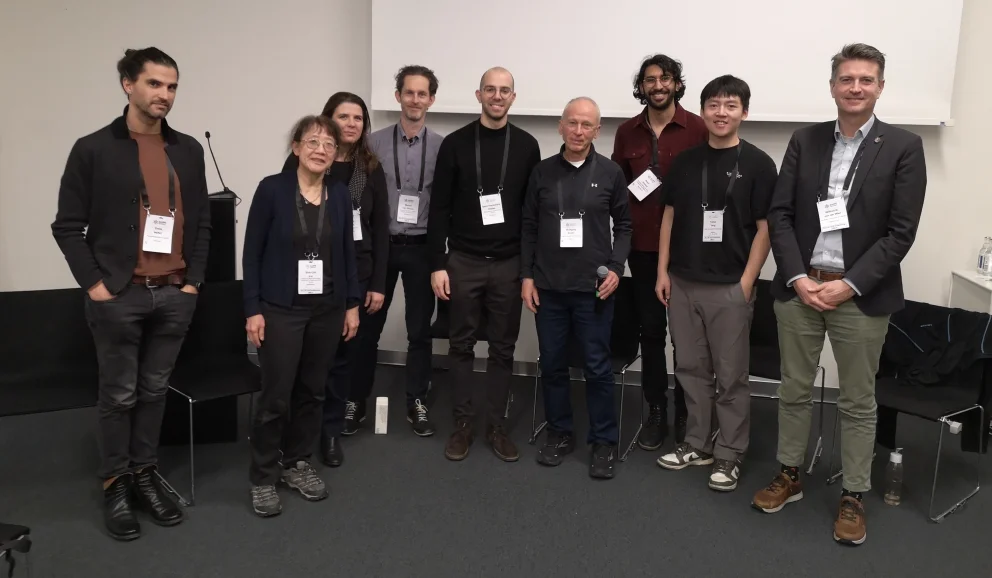
At the ELLIS Unconference alongside EurIPS 2025, the unit co-organized a successful workshop together with the ELLIS Unit Nijmegen on "Energy-Efficient AI: Models, Algorithms, and Hardware for Sustainable Intelligence".
ELLIS Sites ICML Fest
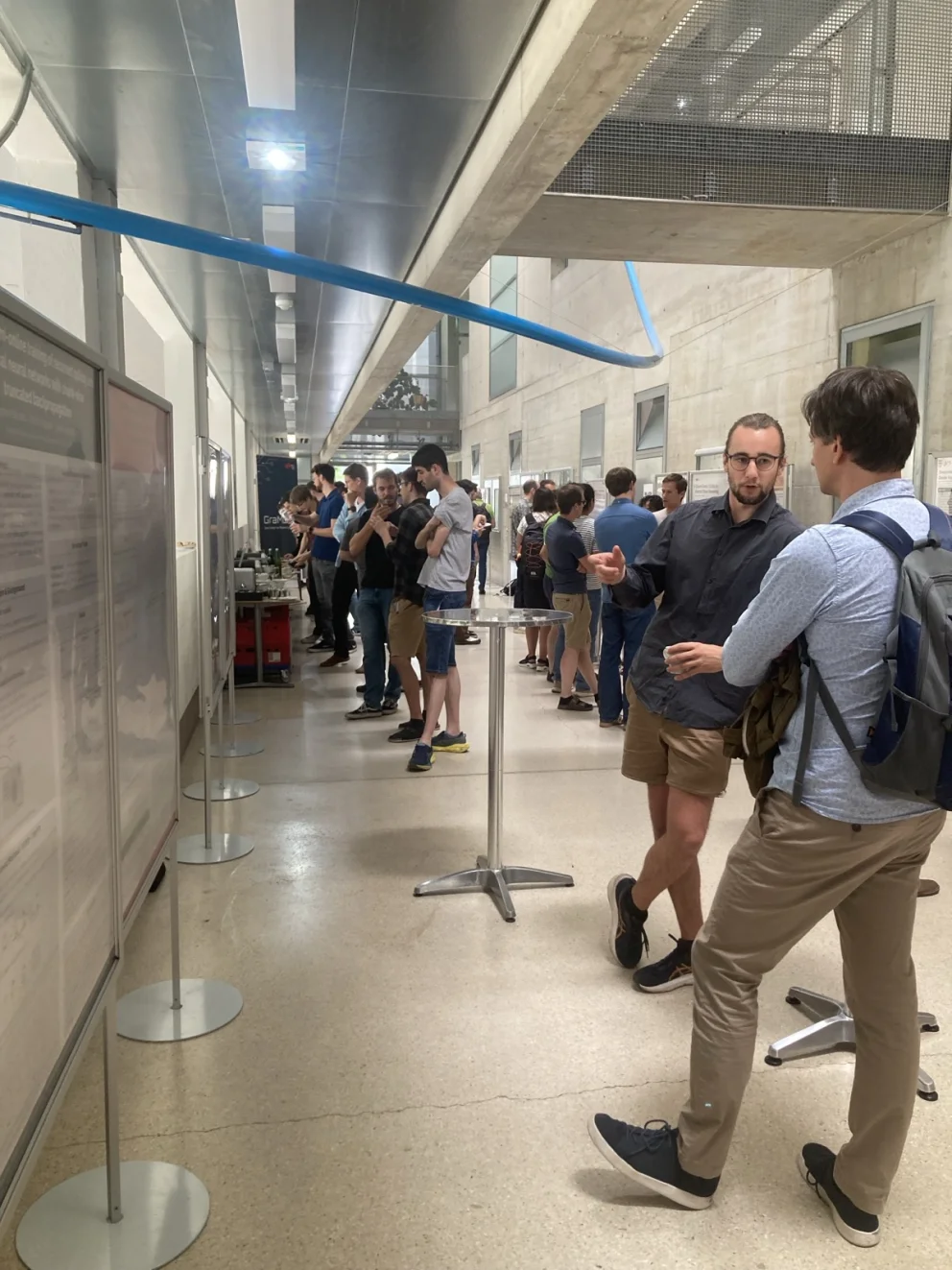
On June 17, 2026, the unit joined the ELLIS Sites ICML Fest: Celebrate, Connect, Collaborate for the first time: Together with GraML, they hosted a lively poster session, to celebrate their scientific achievements, connect with colleagues and foster local collaboration. Their researchers could share their recent work and discuss ongoing projects and ideas, showcasing contributions from ICML 2026, ICLR 2026, RecSys 2025, CPAL 2025, and AIROV 2026, among others.
Future Plans: ELLIS Program, Lectures and Workshops
The ELLIS Unit Graz currently prepares, together with other ELLIS Units, a proposal for a new ELLIS Research Program “Energy-efficient AI”. We invite all interested ELLIS Members to contact us if they are interested in participating.
Further collaborations across the ELLIS, ELSA and ELIAS networks are in the pipeline, among which cross-unit (online) lectures and workshops.
ELLIS Site Coordinator Exchange
The Unit is actively engaged in the ELLIS Site coordinator’s group, to strengthen the ELLIS network from all angles. Through this, they contribute to the exchange of ideas, tips and inspiration among ELLIS Site Coordinators at the monthly meetings, the yearly Coordinator’s Retreat, and regular contact with coordinators of other units or sites.
Support for Young Talents
The Unit has a special focus on talent development as it is part of their mission. Therefore, their researchers are regularly involved in the ELLIS-central recruiting rounds, as prospective supervisors but also reviewers and our unit has 2 ELLIS PhD candidates, with the aim to increase this number further.
They provide focused, and hands-on teaching and supervision activities at TU Graz in Bachelor’s and Master’s and PhD programmes and are hosts for IAESTE und ERASMUS+ Interns. Outside of TU Graz, they regularly contribute with high-class courses at international Summer Schools, such as the European Summer School on Artificial Intelligence (ESSAI), and the International Summer Schools on Bilateral AI and encourage their students to participate.
The unit's PhD candidates have full access to all courses and training opportunities through the enrollment in the Doctoral School for Computer Science at TU Graz. Some are additionally enrolled in the Bilateral AI Doctoral School or part of one of the two European Doctoral Networks, funded by the Marie Skłodowska-Curie Actions (MSCA), see above. Moreover, the PhD candidates are directly involved in their cutting-edge research activities and actively contribute to and sometimes lead advances in the field.
Their support for young talent also focuses on career steps beyond the PhD, with an attractive tenure-track framework supported by the faculty of computer science and biomedical engineering (CSBME faculty) at TU Graz. A similar concept is supported by the Bilateral AI Project, having a dedicated position for a Young Research Group Leader, where young researchers can work independently and build up their own team.
Efforts in Public Engagement
Public ELLIS Reading Group
Since late 2025, the unit co-hosts, together with the newly-established ELLIS Unit NRW, the public ELLIS Reading Group “Mathematics & Efficiency of Deep Learning”, after merging two ELLIS reading groups that had been running independently since 2022.
Podcasts for the General Public
Their researchers explain their work to a lay audience in the Science podcast of their University (in German only). You can listen to the interviews with Robert Legenstein and Elisabeth Lex, where they explain their work for a general audience.
Events
Researchers of the unit were involved in the organisation of the Technology Impact Summit 2025 in Graz, bringing together many big names from the AI Ecosystem in Austria, across science, industry and politics.
View the highlights summary:
Text written by ELLIS Unit Graz Coordinator Randi Goertz.