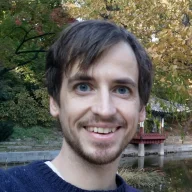
Tanja Bien
The research focuses on constrained inverse design problems governed by partial differential equations (PDEs), where the goal is to infer boundary or initial conditions that optimize a given objective. Traditional methods for inverse design in fluid dynamics or related domains are computationally expensive due to the vast design space. To address this, we explore generative models, in particular diffusion models, as a way to directly sample feasible designs or trajectories.
Two central research questions are (1) how to incorporate constraints and (2) how to embed physical knowledge into the generated solutions so that they become more physically consistent. To this end, we study different guidance mechanisms and compositionality, where we combine the scores of multiple diffusion models. Each model can focus on a different aspect, such as objectives, objects, or constraints, allowing the generated solutions to satisfy multiple requirements simultaneously or to generalize to unseen combinations of features or relations. In addition, we investigate methods that enforce consistency with the underlying PDEs, ensuring that the generated solutions remain faithful to the governing physical laws.