
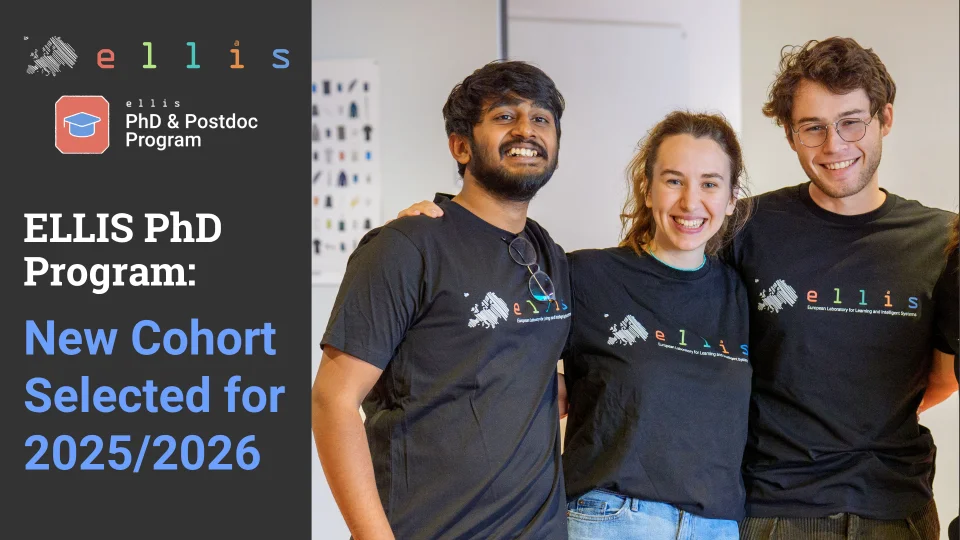
Welcoming the 2025/2026 ELLIS PhD Program Cohort Following Record Application Growth
Rising Interest within Europe and Beyond
This year’s application round once again attracted strong international interest. In total, around 4,500 applicants registered on the ELLIS application portal, representing a 41% increase compared to the previous recruitment cycle. Of these, 2,111 candidates completed and submitted their applications, marking a remarkable 43% boost from last year.
Submitted applications reflect a highly international pool, spanning 104 nationalities across 94 countries. In terms of nationalities, around 25% of applicants were European, followed by 19% from India, 11% from China, 11% from Iran, and 6% from Pakistan.
From the ELLIS network, 321 advisors signed up for the call, representing around 200 European research institutions across 21 countries.
The New Cohort
Following a highly competitive selection process conducted by 415 evaluators, a total of 121 PhD students (26% female) were admitted to the program. They will begin their doctoral studies in the upcoming academic year.
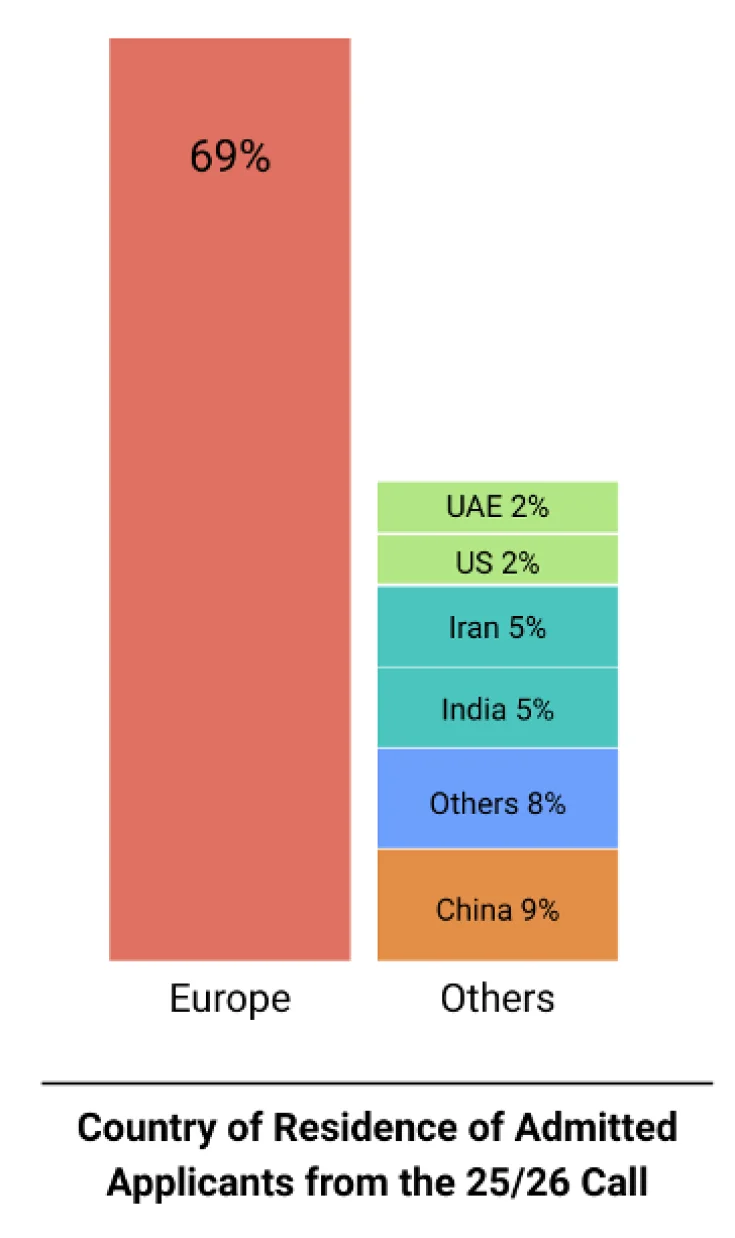
As in previous years, the majority of admitted students (69%) are based in Europe, while the remaining 31% are distributed across the UAE, the United States, Iran, India, China, and other countries globally. In terms of nationalities, the admitted cohort was highly diverse, with 51% of students coming from Europe, 13% from China, 11% from India, and the remaining 25% from other countries. Overall, the cohort represents 38 nationalities across 27 countries.
The newly selected ELLIS PhD students are set to embark on cutting-edge research projects alongside leading AI experts across Europe. Each student is co-supervised by two advisors based in different European countries, ensuring a strong international dimension to their doctoral training. A minimum six-month research exchange with the secondary advisor further enriches the experience and fosters collaboration across institutions and borders.
The research interests of the newly admitted students are led by core machine learning topics, with Deep Learning (55%) emerging as the most popular area, followed by Computer Vision (30%), Machine Learning Algorithms (22%), and Robust and Trustworthy Machine Learning (22%).
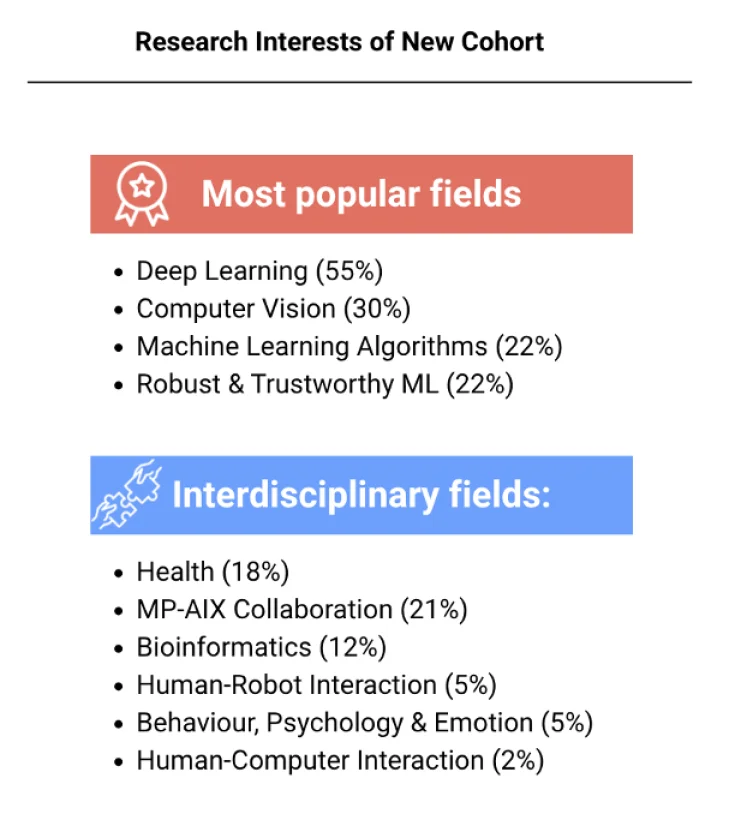
The cohort also shows strong interdisciplinary interests, with Health (18%) and Bioinformatics (12%) among the most prominent areas. Smaller but notable shares engage with Human-Robot Interaction (5%), Behaviour, Psychology & Emotion (5%), and Human-Computer Interaction (2%), highlighting the cohort's interest in applying AI to both human-facing and biomedical fields.
Since last year, ELLIS PhD students also benefit from the new collaboration with the Max Planck Artificial Intelligence Network (MP-AIX), which provides additional fully funded PhD fellowships in Machine Learning and AI. Notably, 21% of the new cohort expressed interest in this collaboration. Through this partnership, students can be co-supervised by experts from both the Max Planck Society and the ELLIS network, further expanding the exceptional mentorship and interdisciplinary research opportunities available to them (more information).
Current Overview of the ELLIS PhD Program
As of now, the ELLIS PhD Program includes approximately 500 students and offers three distinct tracks: Most students (83%) chose the academic track, demonstrating a strong commitment to foundational research. 13% of students opted for the industry track, highlighting ELLIS’s relevance in applied AI and its strong ties with leading companies. The interdisciplinary track attracted 4% of the students – a small, but promising sign of growing interest in bridging machine learning with areas such as social sciences, natural sciences, healthcare, or environmental studies.
About the ELLIS PhD Program
Since its founding in 2020, the ELLIS PhD Program has become a key instrument for attracting, training, and retaining AI talent in Europe. Its emphasis on scientific excellence, international mobility, and cross-institutional collaboration offers doctoral researchers a unique opportunity to develop their careers within one of the world's leading AI research networks.
Beyond their research projects, students participate in workshops, summer schools, networking activities, and community events that help foster collaboration across cohorts and research areas.
The next call for applications is expected to open in October 2026, offering future candidates the opportunity to join a vibrant community of researchers working at the forefront of artificial intelligence and machine learning.
For more information about the ELLIS PhD Program and future application rounds, visit the ELLIS website at ellis.eu/phd-postdoc and sign up for the ELLIS Edge Newsletter.
To gain further insight, watch student testimonials or learn more about the career trajectories of ELLIS PhD Alumni.
Data analysis by ELLIS PhD Program Coordinator Charlotte Delage: