
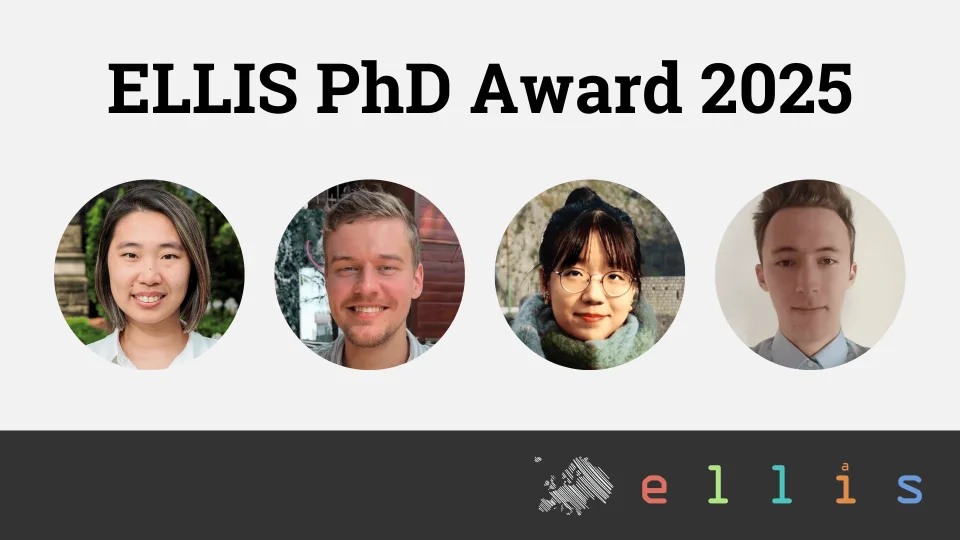
The ELLIS PhD Award 2025 recognizes four young scientists from universities in Tübingen, Lausanne, Zurich & Vienna
Each of the four receive prize money for their outstanding dissertations in the field of modern AI. The award is sponsored by the Kühborth Stiftung GmbH and recognizes outstanding PhD students and their research achievements.
This year the competition among nominees was particularly strong so two runners-up were selected along with the two winners.
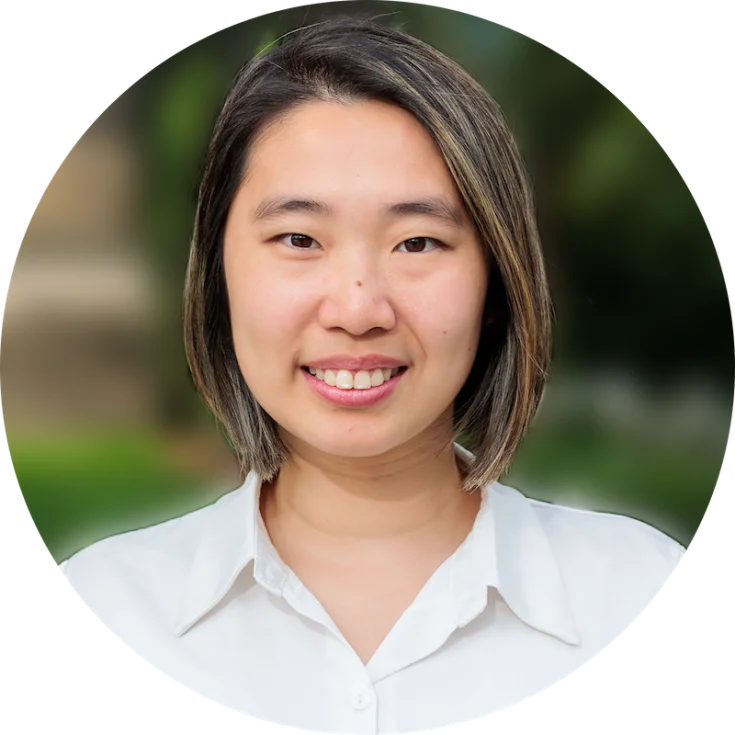
Zhijing Jin
Zhijing is a Research Scientist at the Max Planck Institute for Intelligent Systems, Incoming Assistant Professor at the University of Toronto, CIFAR AI Chair, and ELLIS Advisor. Her work spans Natural Language Processing, Causal Inference, Responsible AI, Large Language Models, AI for Science.
Zhijing earned her PhD at the MPI-IS, co-supervised through the ELLIS PhD Program by Bernhard Schölkopf (MPI-IS, ELLIS co-founder) and Mrinmaya Sachan (ETH Zurich, ELLIS Fellow). For her dissertation on “Causality for Natural Language Processing”, Zhijing’s research pioneered a causal foundation for modern natural language processing and large language models. Her dissertation introduced rigorous causal frameworks that reveal how language models reason, generalize, and interact, enabling more robust, interpretable, and socially responsible AI systems. She has advanced understanding across causal inference, AI safety, and multi-agent LLMs, offering new tools to diagnose and mitigate bias, evaluate moral and social reasoning, and analyze emergent cooperation in LLM societies. Her work charted a path toward trustworthy AI that can reason about cause and effect, align with human values, and support equitable impact across global communities.
Zhijing's time in Europe was characterized by unique academic training that emphasizes math, physics, and philosophy, which culminated in her representing the Max Planck Institute for Intelligent Systems at the 2024 Lindau Nobel Laureate Meeting.
“Receiving the ELLIS PhD Award is an incredible honor,” Zhijing says. “I am deeply grateful to my advisors, Bernhard Schölkopf and Mrinmaya Sachan, for their guidance, and to the broader research community for supporting my work at the intersection of causality, NLP, and responsible AI. This recognition motivates me to continue advancing Causal NLP as I begin my role as an Assistant Professor at the University of Toronto—also serving as a CIFAR AI Chair and an ELLIS Advisor—bridging the European and Canadian AI research communities. I am committed to building AI systems that are robust, interpretable, and beneficial to society.”
Learn more about: Zhijing Jin

Maksym Andriushchenko
Maksym is a Principal Investigator at the ELLIS Institute Tübingen and the Max Planck Institute for Intelligent Systems, where he leads the AI Safety and Alignment group. His main area of research is AI safety. Maksym also serves as a chapter lead for the new edition of the International AI Safety Report, chaired by Prof. Yoshua Bengio, and has previously collaborated on AI safety with leading organizations including OpenAI, Anthropic, the UK AI Safety Institute, the Center for AI Safety, and Gray Swan AI.
Maksym obtained his PhD in machine learning from EPFL in 2024, advised by Prof. Nicolas Flammarion. His thesis, titled "Understanding Generalization and Robustness in Modern Deep Learning," was awarded the Patrick Denantes Memorial Prize for the best thesis in the Computer Sciences department of EPFL and was supported by the Google and Open Phil AI PhD Fellowships.
His thesis tackled fundamental questions about why modern deep networks are fragile to adversarial perturbations yet still generalize well, by developing efficient adversarial training methods, identifying catastrophic overfitting, proposing query-efficient black-box attacks, and creating the RobustBench benchmark used for standardized robustness evaluation. On the generalization side, he showed how algorithms such as sharpness-aware minimization and large-step-size SGD shape learned features and test performance, and provided rigorous evidence that popular sharpness-based measures mostly reflect optimization hyperparameters rather than being inherent predictors of generalization.
Upon receiving the ELLIS PhD Award, Maksym stated: "I am deeply honored to receive this prestigious award. I'm incredibly grateful to my PhD and master's advisors, Prof. Nicolas Flammarion and Prof. Matthias Hein, who taught me so much about machine learning and helped shape my research taste."
Learn more about: Maksym Andriushchenko

Siwei Zhang
Siwei is a Research Scientist at Meta, with her main area of research being 3D Human Motion Modelling. Her research centers on 3D human motion perception and synthesis, as well as modeling human–scene interactions.
Siwei obtained her PhD from ETH Zürich, where she was supervised by Professor Siyu Tang. Her thesis, titled "Environment-aware 3D Human Motion Capture in Challenging Scenarios," presents original contributions to computer vision by enabling high-fidelity human motion capture in complex environments with accessible sensors (such as monocular cameras). The methods and datasets proposed in her thesis—LEMO, RoHM, EgoBody, and EgoHMR—enable high-quality motion capture from monocular and egocentric inputs, overcoming long-standing challenges in the field. Her work establishes a solid foundation for future advances in human behavior modeling and synthesis and stands out for its technical depth and creativity. During her doctoral studies, she was awarded the Qualcomm Innovation Fellowship Europe 2023.
“I’m deeply honored to receive the award. It means a lot to have my PhD research recognized by the committee, and I’m especially grateful to my supervisor and collaborators who have supported and inspired me throughout this amazing and enjoyable journey," Siwei shared her gratitude.
Learn more about: Siwei Zhang

Elias Frantar
Since September 2024, Elias has been a Member of Technical Staff at OpenAI, with a primary area of research being LLM efficiency. His work focuses on making large language models smaller and cheaper to use.
Elias pursued his PhD (2020–2024) at the Institute of Science and Technology Austria (ISTA) on LLM efficiency, supervised by Dan Alistarh. His doctoral thesis, titled "Compressing Large Neural Networks: Algorithms, Systems and Scaling Laws," introduced some of the earliest compression methods, such as GPTQ and SparseGPT, which were fast and accurate enough to be applied to extremely large language models. This work made these models significantly smaller and cheaper to use. To ensure these benefits were realized, Elias and his colleagues developed highly optimized GPU kernels (Marlin) for model inference. Furthermore, the thesis studied compression during foundation model pretraining and found the first scaling laws in this context.
During his PhD, Elias also completed internships at ISTA and served as a Student Researcher at Google DeepMind, where he focused on scaling laws for model compression.
“Given that most of the attention my work has been receiving over the course of my PhD has been from US labs, it is great to also see some more recognition coming from within Europe!” Elias said upon receiving the ELLIS PhD Award as a runner up.
Learn more about: Elias Frantar
About the ELLIS PhD Award
Any European dissertation in the area of artificial intelligence and machine learning-related fields (including computer vision and robotics) can be nominated for the annual award. The dissertation is then reviewed by a committee of renowned scientists for technical depth, the significance of the research contribution and the potential impact on theory and practice.
“Since the establishment of the ELLIS PhD Award in 2019, we have been receiving outstanding nominations every year, and thus the task of selecting the winners is both an honour and at the same time very difficult. That’s why I am very excited to also personally congratulate this year’s awardees who have been selected to receive this highly prestigious award,” says Bernt Schiele, chair of the selection process for the ELLIS PhD Award.
Learn more about the award and the nomination process. The next nomination deadline is on April 15, 2026 for dissertations completed in 2025. For questions, please send an email to phd-award@ellis.eu.
About the Kühborth Stiftung GmbH
Kühborth Stiftung GmbH is a foundation established by Dr. Dipl.-Ing. Wolfgang Kühborth and his wife Helga Kühborth to promote research and teaching in the fields of natural, technical and economic sciences. By sponsoring the ELLIS PhD Award, the Kühborth Stiftung aims to support advances in artificial intelligence, to promote academic excellence, and to propagate the European idea.