ELLIS Unit Lausanne: Advancing AI at the Intersection of Science, Health, and Society
Mission & Vision
The ELLIS Unit Lausanne is driven by the vision of shaping a future where artificial intelligence benefits society through excellence in research, education, and innovation. Hosted at EPFL within the EPFL AI Center, the Unit brings together leading researchers across diverse areas of AI and Machine Learning, fostering a uniquely interdisciplinary environment and strong engagement with industry and public stakeholders.
By combining foundational advances in machine learning and science expertise with real-world impact, the Unit aims to strengthen Europe’s leadership in AI while addressing some of today’s most pressing challenges, from healthcare and scientific discovery to sustainability. A core pillar of this mission is training of the next generation of AI researchers and entrepreneurs, ensuring that cutting-edge knowledge translates into meaningful societal impact.
Led by Unit Director Prof. Pascal Frossard, the ELLIS Unit Lausanne comprises 37 members and actively contributes to several ELLIS Research Programs, including:
Key Numbers & Achievements
Established in 2020, the ELLIS Unit Lausanne is one of the founding Units of the ELLIS network and a central hub for AI research in the French-speaking part of Switzerland. From its inception, the Unit has actively contributed to the development of ELLIS through research, education, community-building efforts, and network-wide initiatives.
Today, the Unit comprises 37 members, (20 Fellows, 11 Scholars, and 6 Members) among them multiple ERC grantees and internationally recognized leaders across AI, health, and the basic sciences.
Since its creation:
30+ PhD students and postdoctoral researchers have been mentored within the ELLIS PhD & Postdoc Program
Extensive co-supervision across Europe, with Units including Alicante, Linz, Oxford, Tübingen, Turin, Barcelona, Amsterdam, Munich, Cambridge, Oxford, Vienna and more.
100+ joint publications with researchers across the ELLIS network
"At ELLIS Unit Lausanne, our goal is to advance AI through excellence in both foundational machine learning research and science discovery, as well as real-world impact. By fostering collaboration across disciplines and institutions, we aim to develop AI systems that are efficient, trustworthy and beneficial to society."
Pascal Frossard, Director of ELLIS Unit Lausanne
Research Areas
The ELLIS Unit Lausanne conducts both foundational and applied research across several strategic domains:
AI for Health
The Unit develops AI methods to advance healthcare and biomedical sciences, in close collaboration with hospitals, pharmaceutical companies, and global health partners. Research focuses on improving diagnosis, patient outcomes, and personalized medicine through clinical decision support systems, digital health monitoring, and AI-driven drug discovery.
Addressing major challenges such as cancer and cardiovascular diseases, the Unit develops next-generation AI tools based on large-scale, multimodal clinical and biological data.
Key research directions include:
AI-driven clinical decision support, improving diagnosis and treatment planning
Personalized medicine, integrating imaging, genomics, and clinical data
Privacy-preserving data infrastructures, enabling secure collaboration across institutions
Foundation models for healthcare, supporting biomarker discovery and treatment prediction
AI for drug discovery, accelerating translation from research to clinical applications
A research example is the Cell perspective “How to Build the Virtual Cell with Artificial Intelligence: Priorities and Opportunities” (2024), which outlines a roadmap for using AI to model cellular systems by integrating multimodal biological data across scales, with the goal of advancing biological discovery and precision medicine.
Fundamentals of AI
The Unit advances the theoretical foundations of artificial intelligence, with a strong focus on developing robust, scalable, and interpretable machine learning methods. This research underpins progress across a wide range of application domains, from healthcare to scientific discovery.
By combining mathematical rigor with empirical insights, researchers aim to better understand how AI systems learn, generalize, and interact with complex environments.
Key research directions include:
Design of novel learning algorithms, improving efficiency, robustness, and scalability
Understanding learning dynamics and generalization, across diverse data regimes
Geometric and structured machine learning, enabling new representations of complex data
Interpretable and trustworthy AI, ensuring transparency and reliability of models
Theory-driven approaches to modern AI systems, bridging statistical, computational, and physical perspectives
A research example is the ICML 2024 paper “Improving SAM Requires Rethinking its Optimization Formulation”, which revisits a widely used optimization method for deep learning and proposes a new bilevel formulation that improves robustness and performance while keeping similar computational complexity.
AI for Science
The Unit leverages AI to accelerate discovery across disciplines such as biology, chemistry, physics, and environmental science, combining machine learning with domain expertise to tackle complex scientific challenges.
Key research directions include:
Modeling complex biological and molecular systems, enabling advances in protein design and drug discovery
Predicting properties of new materials, supporting large-scale materials discovery and simulation
Advancing climate and environmental modeling, improving understanding of complex natural systems
Integrating data-driven approaches with scientific theory, bridging machine learning with fundamental principles
Recent advances illustrate this interdisciplinary approach. Researchers have developed AI systems capable of autonomously planning and executing chemical synthesis tasks by combining large language models with specialized tools. In parallel, physics-informed models enable stable and reliable simulations of complex dynamical systems, while scalable machine learning models achieve state-of-the-art performance in materials discovery.
A recent research example is the Nature Communications paper “PET-MAD as a lightweight universal interatomic potential for advanced materials modeling” (2025), which introduces a scalable machine learning model for atomistic simulations that achieves state-of-the-art performance on materials discovery benchmarks, while remaining efficient and usable in real-world scientific workflows.
Another research example is the Nature Machine Intelligence paper “Augmenting large language models with chemistry tools” (2024), which introduces ChemCrow, an AI system that combines large language models with 18 specialized tools to autonomously perform complex tasks in chemical synthesis, drug discovery, and materials design, helping bridge computational and experimental chemistry.
Ongoing Research Projects & Initiatives
The ELLIS Unit Lausanne is involved in several large-scale initiatives connecting foundational AI research with scientific, clinical, and societal applications. A central example is the Swiss AI Initiative, a joint effort of the EPFL AI Center and the ETH AI Center (ELLIS Unit Zurich) to advance open science and open-source foundation models at national scale, supported by a broad Swiss research ecosystem. Through shared infrastructure and targeted funding, the initiative enables both core AI research and high-impact applications.
The initiative brings together projects across key areas of AI, including:
Open and multilingual foundation models, such as Apertus, a large-scale open LLM trained from scratch
Multimodal learning systems, addressing complex real-world tasks across vision, language, and interaction
AI for science, with applications in chemistry, materials discovery, climate modeling, and quantum physics
AI for health, including clinical language models and precision medicine
Trustworthy and efficient AI, focusing on model compression, evaluation, and alignment
These efforts involve collaborations across leading institutions in Switzerland and internationally, combining machine learning advances with domain expertise.
One of the most visible outcomes is Apertus, Switzerland’s first large-scale, open, multilingual language model, developed by EPFL, ETH Zurich, and CSCS on public infrastructure. Designed for transparency and practical deployment, it reflects a commitment to accessible and trustworthy generative AI.
The technical foundations are detailed in the arXiv paper “Apertus: Democratizing Open and Compliant LLMs for Global Language Environments” (2025), presenting the model architecture, training strategy, and multilingual design
In health, the Unit contributes to major national efforts to integrate AI into clinical practice:
NAIPO is developing a secure Swiss infrastructure for AI-driven precision oncology, supporting diagnostics, treatment personalization, and clinical decision-making while preserving sensitive data
SwissCardIA focuses on cardiovascular prevention through multimodal risk prediction combining wearable, imaging, and clinical data
Beyond Switzerland, the Unit contributes to global initiatives:
International Computation and AI Network (ICAIN), launched in 2024 with EPFL as a founding member alongside ELLIS and international partners, expanding access to computing infrastructure, data, and expertise to support collaborative projects addressing challenges such as climate change, health, and inequality.
Collaborating across ELLIS
The ELLIS Unit Lausanne maintains strong and active collaborations with numerous ELLIS Units across Europe, spanning joint research projects, co-supervision of PhD students, and the organization of workshops and scientific events.
Key collaborative activities include:
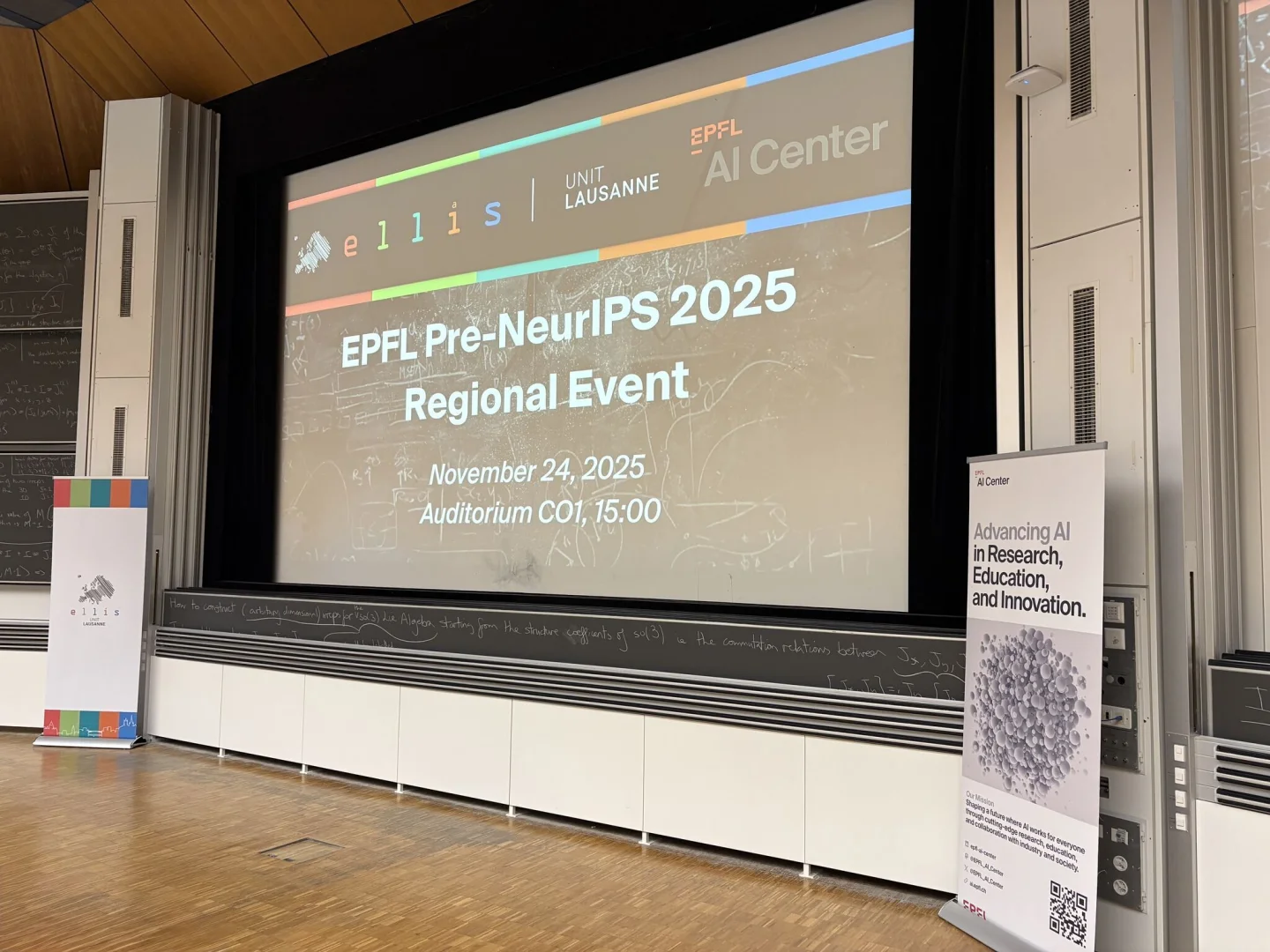
ELLIS Pre-NeurIPS events (2021–2025) as part of the ELLIS NeurIPS Fest, showcasing research contributions across the network
EPFL Pre-ICML 2025 Research Highlights, fostering early exchange of ideas ahead of major conferences
ELLIS PhD & Postdoc Summit (2021), organized in collaboration with Units including London, Munich, Oxford, and Tübingen
Joint scientific workshops, such as the Graph Signal Processing Workshop (Oxford, 2023) and ELLIS workshops on molecular machine learning (ML4Molecules)
Cross-unit seminars, featuring leading ELLIS researchers as part of the EPFL AI Center seminar series, including Michael Bronstein, Riccardo Zecchina, Anna Lukina, Francis Bach, and Fabian Theis
Collaborative events and initiatives, including LemanTh (machine learning theory), the Open-Source LLM Builders Summit, and workshops on trustworthy AI and AI for scientific simulations
Through these exchanges and joint efforts, the Lausanne Unit contributes to strengthening the cohesion and scientific excellence of the ELLIS network and the broader European AI ecosystem.
Support for Young Talents
Supporting early-career researchers is a core pillar of the ELLIS Unit Lausanne. The Unit hosts a vibrant community of PhD students and postdoctoral researchers through the prestigious ELLIS PhD & Postdoc Program, which plays a central role in fostering interdisciplinary training, mentorship, and mobility across Europe. Through co-supervision and exchanges with other ELLIS Units, young researchers benefit from a unique international research environment.
A key component of this effort is the organization of summer schools and training programs, providing intensive learning experiences at the intersection of AI and application domains. In particular, the ELLIS Unit Lausanne Summer School brings together students from across Europe to explore:
Large language models and generative AI
Graph machine learning and multimodal systems
Applications to healthcare and biological discovery
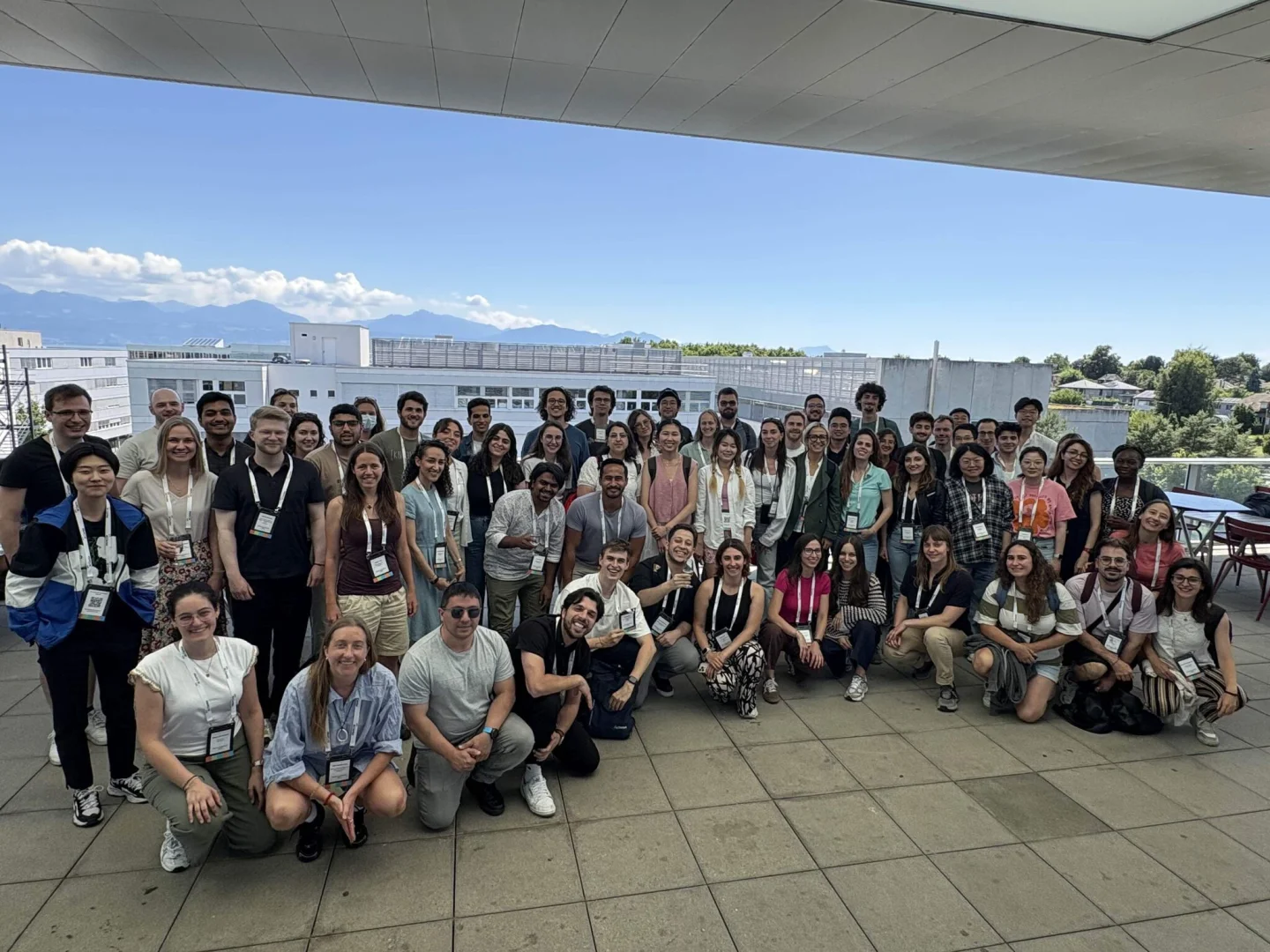
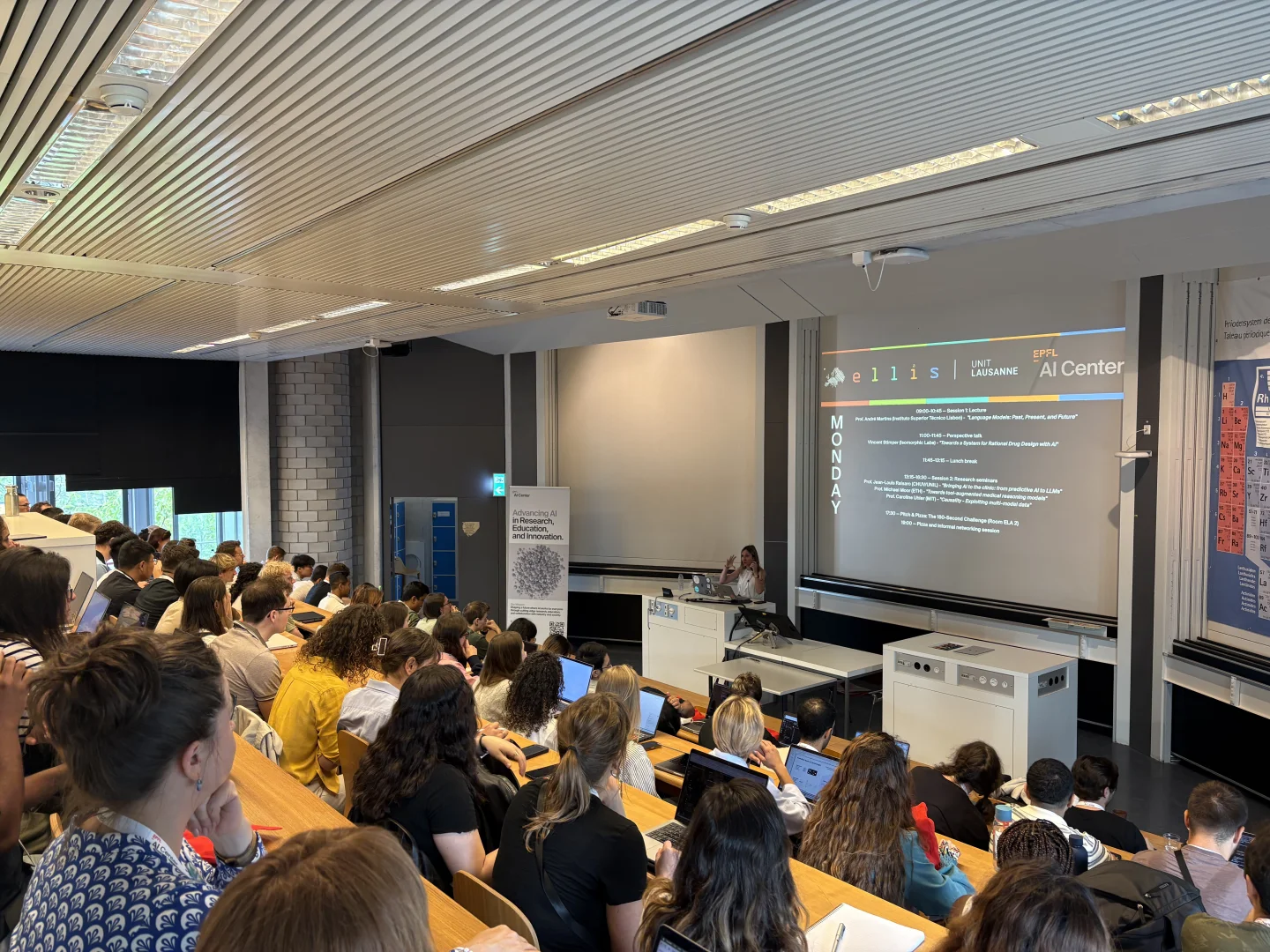
These programs combine lectures from leading experts with hands-on sessions and collaborative exchanges, equipping early-career researchers with the skills, network, and experience to drive the next generation of AI innovation.
Efforts in Public Engagement
The ELLIS Unit Lausanne actively promotes dialogue between AI research and society through a range of outreach and engagement initiatives.
The Unit contributes to global efforts such as the International Computation and AI Network (ICAIN), launched at the World Economic Forum in 2024, with EPFL as a founding member alongside ELLIS and other international partners. ICAIN seeks to democratize access to AI by opening advanced computing infrastructure, data, and expertise to a global research community, enabling collaborative projects that address challenges such as climate change, health, and global inequality.
At the societal level, the Unit engages directly with citizens through initiatives such as the Citizens’ Assembly on AI, organized by the EPFL AI Center. Bringing together a representative group of participants from French-speaking Switzerland, the initiative developed concrete recommendations on responsible AI governance, emphasizing privacy, transparency, and human oversight.
Additional outreach activities include:
Public lecture series and seminars, organized jointly by the ELLIS Unit Lausanne and the EPFL AI Center, are accessible to a broad audience on YouTube.
Inside AI podcast, featuring discussions with members of the AI community, including ELLIS and Lausanne Unit members.
Engagement with policymakers and civil society, supporting informed and evidence-based dialogue on AI.
Through these efforts, the Unit Lausanne works to make AI research more accessible, promote responsible innovation, and contribute to informed public discourse on the role of AI in society.
View the highlights summary:
Text written by ELLIS Unit Lausanne Coordinator Nicolas Machado.