
ELLIS Career Compass 2026: A Career Workshop by ELLIS PhD Students, for PhD Students
Every doctoral researcher in AI eventually reaches a pivotal crossroads. Leading a research group, joining a frontier AI company, moving into industrial research or founding a start-up each call for different skills, networks and decisions. The ELLIS Career Compass was designed to support participants at exactly this stage, connecting them with people and perspectives to guide their decision about what comes next.
Just as importantly, the event demonstrated that Europe's brightest AI researchers have a future here, and ELLIS is committed to helping them build their careers at European universities, companies and start-ups rather than abroad. The program combined talks by invited speakers from academia, industry, research management and start-ups with expert-led workshops on research proposal writing and business case analysis, giving participants practical skills for a range of career paths.
An initiative of the ELLIS PhD community
Career Compass was initiated and organised by a team of ELLIS PhD students who recognised the need for dedicated career guidance at the end of the doctorate and set out to address it themselves. ELLIS extends special thanks to Wafaa Mohammed (University of Amsterdam) and Harini Sudha (University of Tübingen), whose vision and dedication carried the event from its first idea to the closing ceremony.
They were supported by Christina Sartzetaki (University of Amsterdam), who also hosted the career panel, Evgeniia Tokarchuk (University of Amsterdam), Melika Davood Zadeh (University of Amsterdam) and Tejaswi Kasarla (University of Amsterdam), all of whom took on the organisation alongside their own research. ELLIS congratulates the entire team on establishing a new format within the network.
Two days of talks, discussion and hands-on training
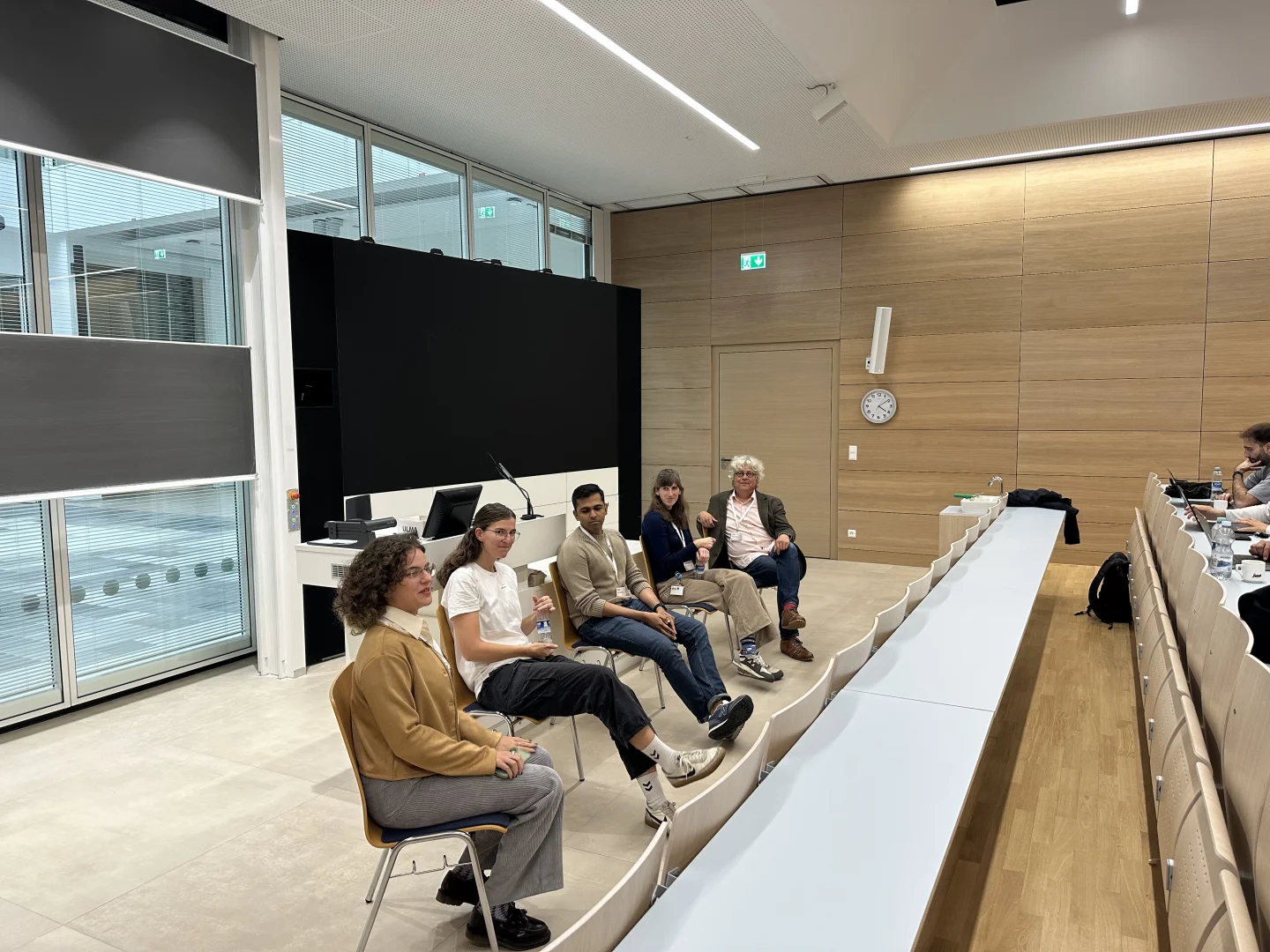
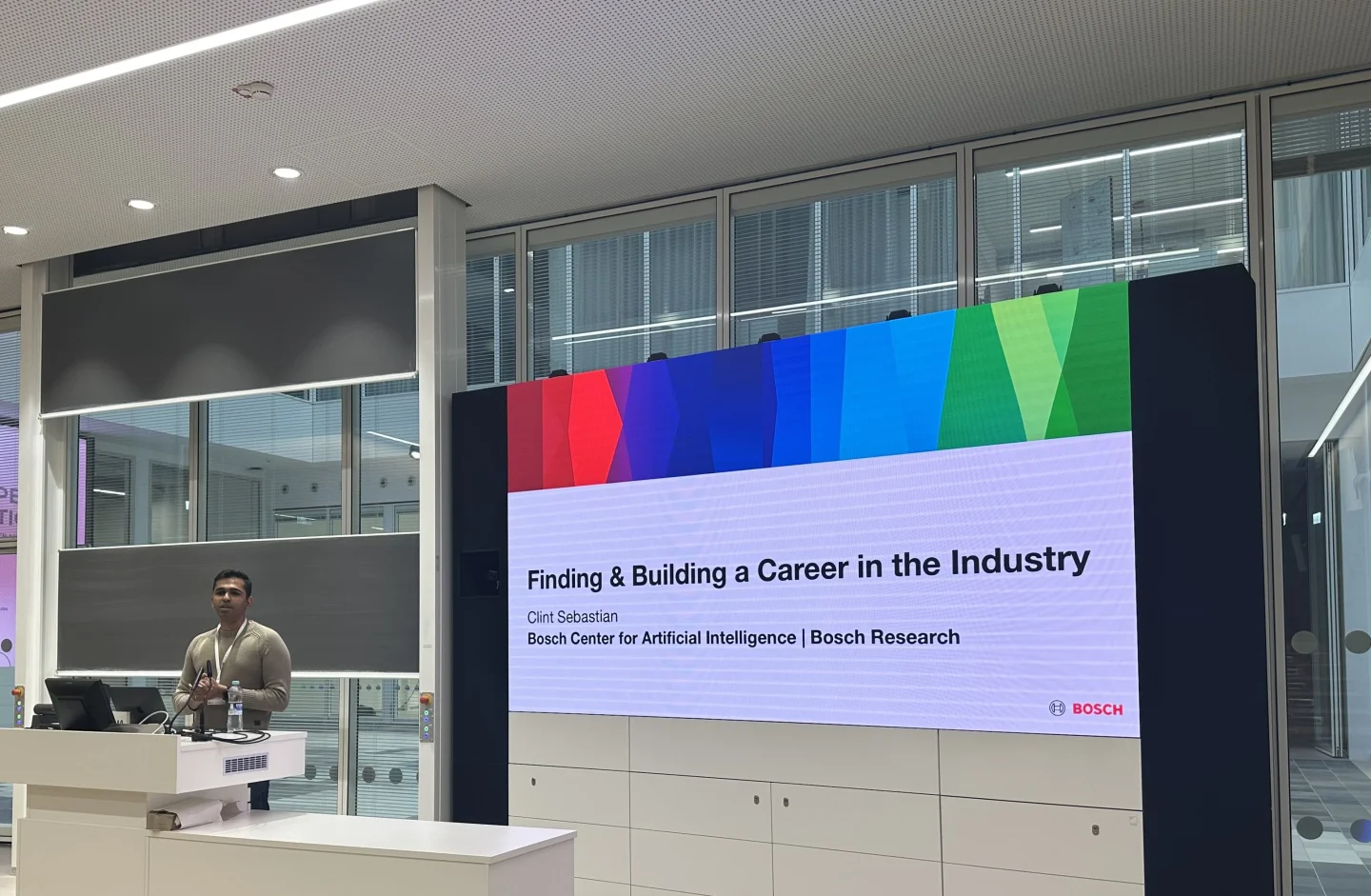
The first day focused on research and career talks by speakers who have pursued different paths after the PhD. Atalanti Mastakouri, Applied Scientist at Amazon Web Services, opened the program, followed by Clint Sebastian, Principal Scientist at Bosch Research, and Christina Bürger, Science Manager at Hertie AI. In the afternoon, Felix Wichmann, Professor at the University of Tübingen, and Katrin Renz, founder of a Physical AI start-up, offered perspectives from academia and entrepreneurship. The day concluded with a career panel featuring Felix Wichmann, Katrin Renz, Clint Sebastian and Christina Bürger, hosted by organiser Christina Sartzetaki, followed by an optional walking tour and punting in Tübingen.


The second day opened with a talk by Peter Gehler, Professor at the Tübingen AI Center, before turning to hands-on training. An extended workshop on research proposal writing addressed a core skill for academic careers, while a workshop on business case analysis introduced the thinking required in industry and start-up settings. The event closed with a joint dinner, networking and a closing ceremony.
Strong feedback from participants
Participants described the event as highly relevant to their current career stage and future plans, and indicated that they would be very likely to recommend it to other PhD students and postdocs. The research and career talks, networking with fellow participants and informal discussions with the speakers were rated as the most valuable parts of the program, followed by the career panel and the two workshops.
Participants left Tübingen with practical advice for their next career steps, new ideas for preparing applications and research proposals, and new contacts across the network. Many highlighted the range of talks on alternative career paths after the PhD, as well as the social events, the speakers and the food. Above all, they valued having dedicated time and space to reflect on their careers, to learn from people who have already walked possible future paths, and to exchange openly with peers who are still deciding what comes next.
For the organisers, Career Compass was as much a learning experience as it was a service to their peers. As the organising team said:
It was a highly rewarding experience to organise an event by PhDs, for PhDs. As a new ELLIS format, it came with many challenges and logistical details to figure out, but we believe this is a great opportunity for students to practise managing such events. We are very grateful for the opportunity, and we hope the ELLIS Career Compass carries forward into the coming years.
Building AI careers in Europe
Europe trains outstanding AI researchers. Retaining this talent requires showing the next generation how their expertise can translate into rewarding careers within Europe, whether in academia, industry or entrepreneurship. The ELLIS Career Compass contributed directly to this goal by connecting early-career researchers with role models from European universities, research institutes, industry labs and start-ups, and by equipping them with the practical skills to pursue these paths.
Enabling its talents to turn their expertise into careers, and to build those careers in Europe, is central to the ELLIS mission. Career Compass 2026 demonstrated that the ELLIS PhD community itself can be a driving force in this effort.
Learn more about ELLIS Career Compass 2026 on the event website.